Early Season Largemouth Bass: Springtime Staging & Prespawn Protocol
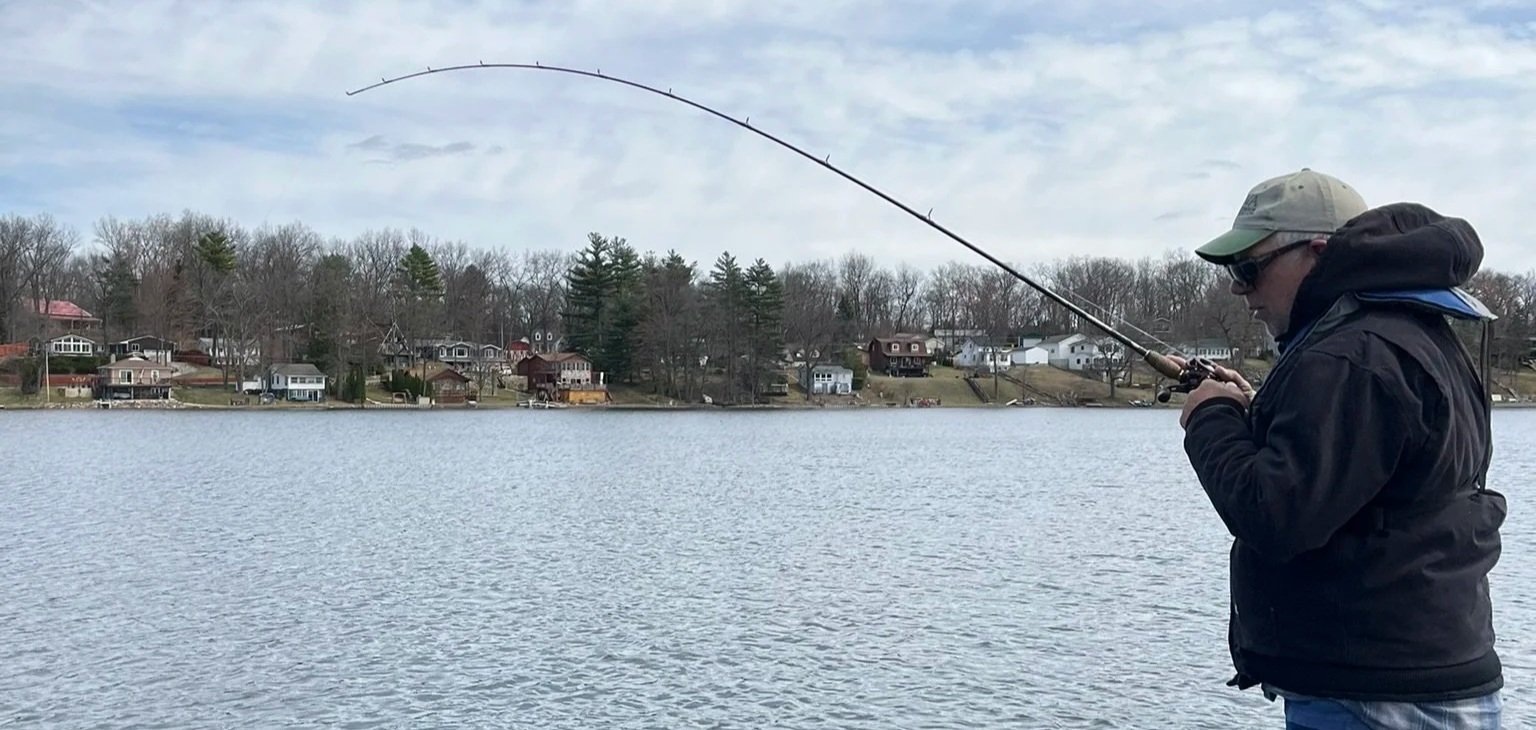
Just because it is cold does not mean the fish are not biting! All you need is to adjust your approach and understanding. You probably already have items in your tackle box that work!
Set time of year where it's about that time. pre-spawn/early spring bass fishing is not only right on time what it needs to be, but it's good for the soul. Many anglers are chomping at the bit to get bit, especially for Northern anglers who have been seeing those down south or out west get after it. In places like Michigan or Minnesota, the weather from day to day can vary from sunshine in 60 degrees to snow and Gusty winds the next. Anglers are tough, while Some Might Say otherwise. Heck or high water, we are going out on this day and it is set in stone. so you finally get to the ramp all loaded with a game plan, but you begin to take it all in and your mind starts racing. What am I doing? What should I be doing when chasing bass on the first trips of the year?
Many of us have been there. Thoughts like “ I thought the water was going to be a little warmer here” or the dreaded “ this spot was good to us last year, but today it was a Dud.”
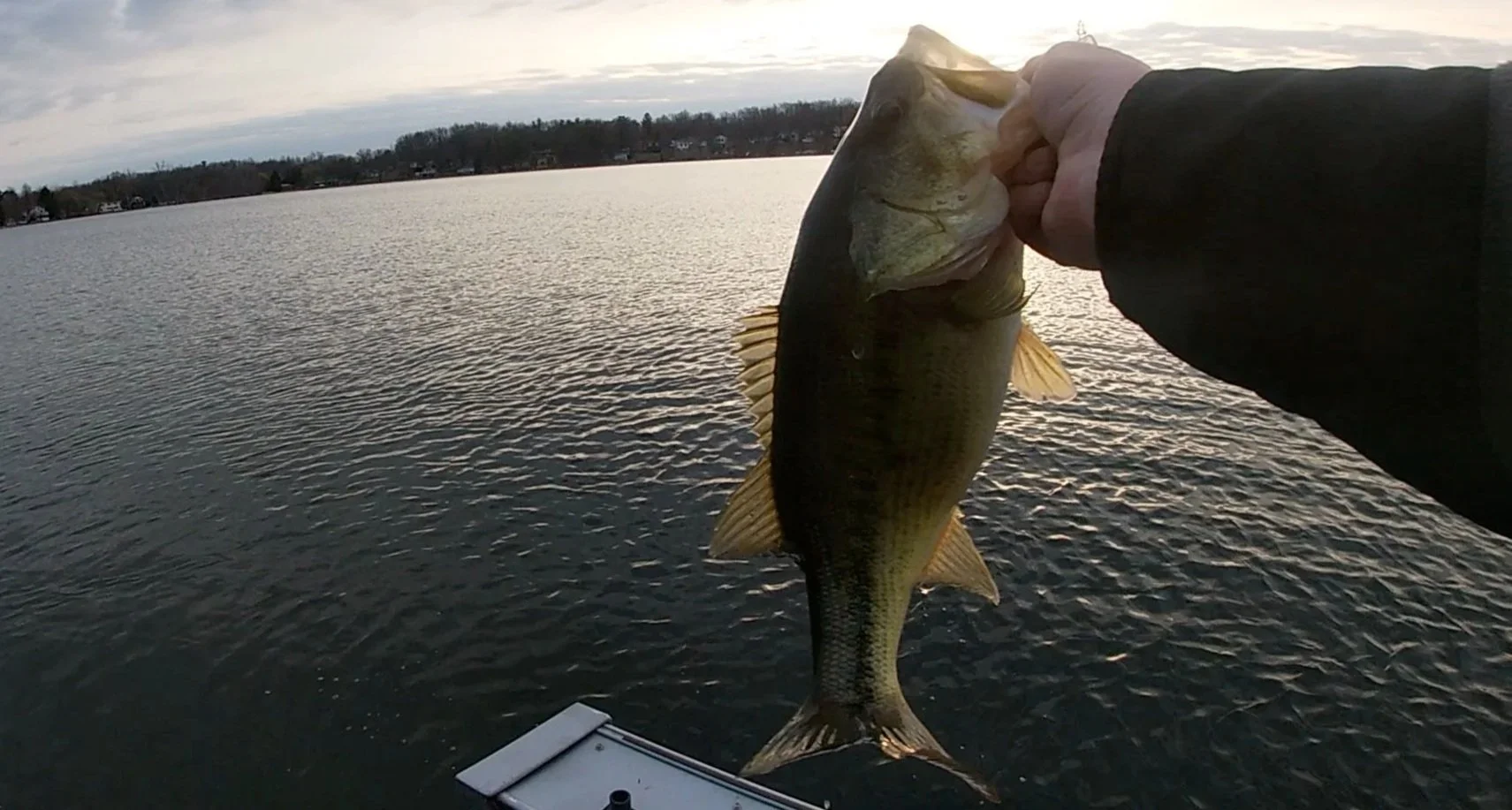
There are many truths (and even more myths) in the world and bass fishing. Remember- “It is never too cold for a bass-it is only too cold for the angler.” under the ice in the depths of winter, largemouth and small mouth will nip a pin drop with a wax worm, slap a lipless crankbait, or slurp a live bait hanging on a tip up. point being-those fish eat and have an activity level higher than one may expect in cold water of early season. They won't choke it or body slam it, but they will try to get a piece of it. How you fish now will be different in approach and method compared to later spring and season.
““water temps are still cold, so fish tend to be more lethargic. I start by fishing slowly through these patterns, but don’t waste too much time on each area (hence fish slowly, fast).”
Before we tie on, we need to find the right spot. This season is about eliminating dead Water if you want to be the most efficient you can be on the water. Ben Nowak, bass fishing Guru from Michigan, knows a thing or two that he shares with others on what to look for. In search of the warmest Waters, areas that are wind blown, have current, and are within proximity of a Northern shoreline of a lake, are a great place to begin. moving water, whether it be through water flow or wind, warms up faster. thanks along northern shores get the most sunlight throughout the day, warming up to set some areas up for a prime afternoon bite.
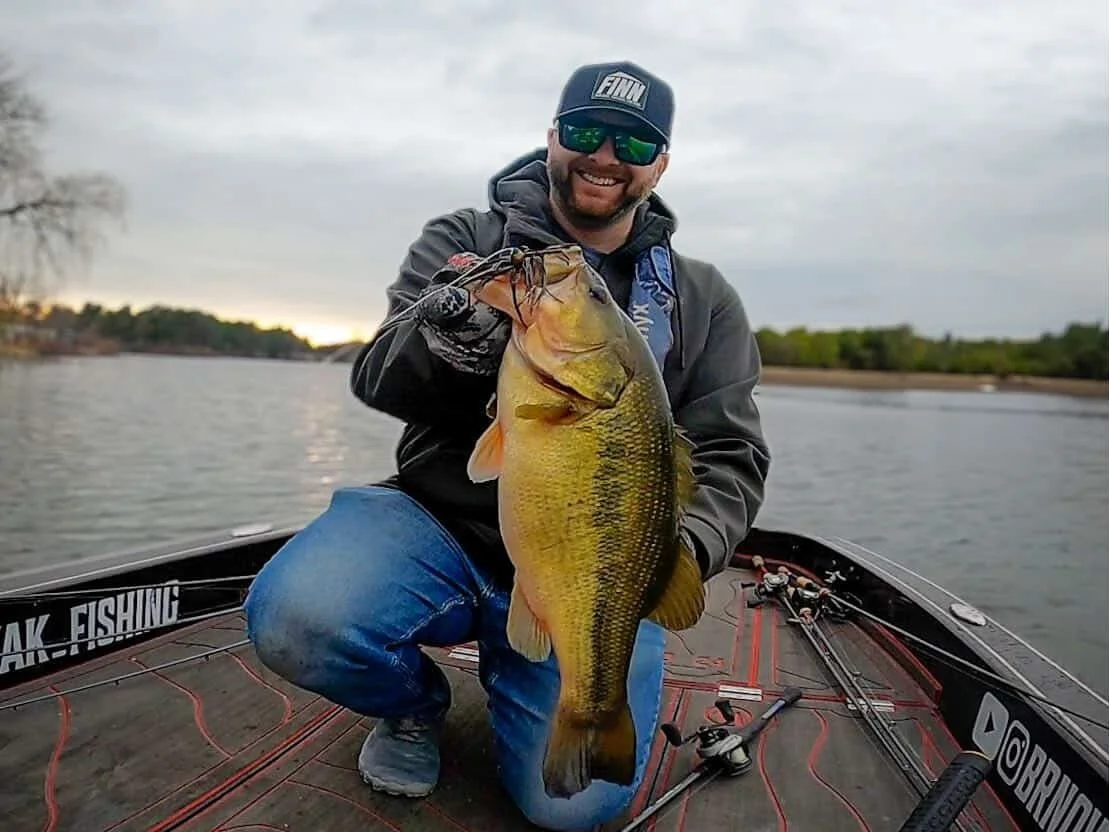
Be sure to follow Ben on Instagram and YouTube @Brnowak_Fishing.
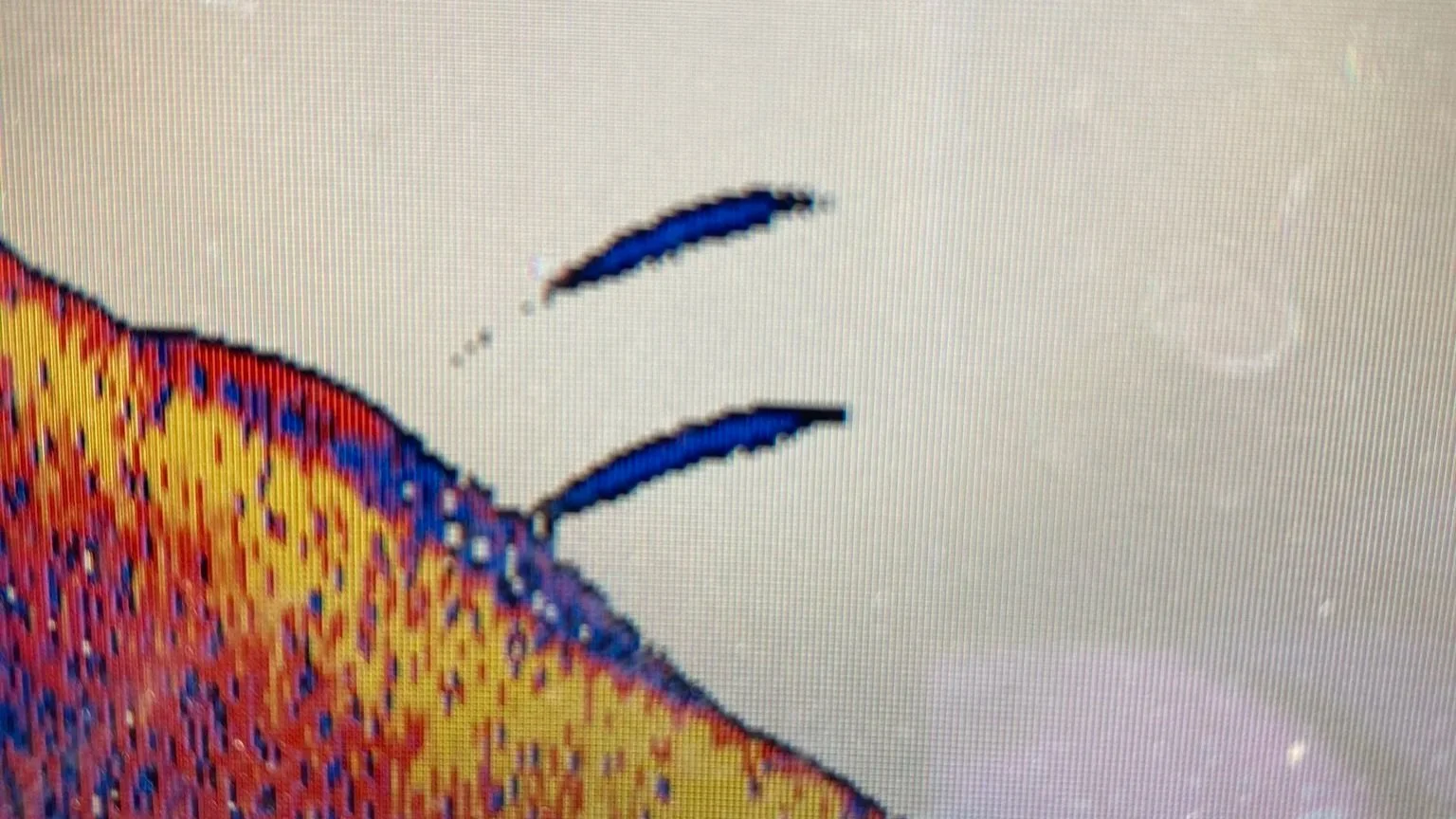
These marks were recorded in 40 degree water in early April. Bass holding close to bottom on a steady incline off of what appears to be (likely wood) structure.
Be on the lookout for what these areas possess. Paying attention to bottom composition and structure is a clue to piecing the mystery together. Mud, rocks, and timber, hold warmth and radiate heat. bass can be sitting right on top of these articles of structure. Keep in mind, when we are looking for warmer water, any upgrade in temperature will do. An increase of two or three degrees Fahrenheit might not seem like much to you and me, but that is where these fish are going to feel most comfortable and can make the world of a difference.
Considering locations, bass are moving out from their wintering areas and hideouts. Start by looking on your map for a deep basin and look for where they would go next. What location ultimately boils down to in the pre-spawn is finding the right middle ground between where they have spent the winter and where they are going shallow to spawn. The first initial mid-depth break would be a worthwhile spot to explore, especially near steady transitions. It is important to remember that there is variability in all things fishing. There will be some fish shallow throughout the entire year, but a significant portion of the bass population will be staging out deep and making their way up. Not all bass are going to be moving at the same time. Fish movement in this sense is not one great migration, rather it is multiple pods of fish on the move in different flights. Depth as it is is subjective to the lake. If your body of water maxes out around 20 or 60 ft or more, begin looking in these areas for wear bass will be migrating from and where they would go next
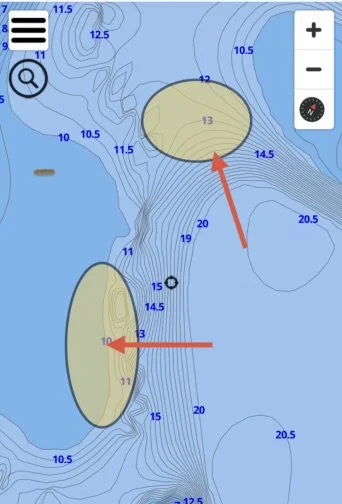
Understanding prespawn movement:
This is a good example of where to start and look for. Finding depths where they could spend winter, then identifying contour paths. Bass will often use steady inclines rather than steeper slopes to follow a consistent temperature change and it allows them to retreat easily up and down as conditions change day to day. After a cold front, they may push back deeper. The first major break from the slope is where they will stage. They are drawn to these areas where the temperature is comfortable and where there is bait. Look for bottom composition that has mud, rocks, wood- whatever that can retain heat and forage.
Hypothetical lake rundown: Let’s say Lake X has a large, deep area that is roughly 20+’. On one side of this area, you see there is a rise that comes up to 12.’ This would be a great place to explore. Looking further, if you notice wood or rock, work these areas thoroughly. If you can find several areas on a lake like this, you can Mull around and see what the fish tell you. A great thing about this time of year is that if one spot doesn't put out, You can go back later and check again.
Depending on their activity, bass will always be laying low either directly on bottom or within a couple of feet above.
A theme to be kept in mind during this time is subtlety with action and vibration. The forage in the water is not busting and swimming erratically. The lake is just starting to wake up and come to life. Crawfish will begin to emerge from their hibernation or scuttle up shallow from where they spent their winter. Baitfish will congregate often in large schools where their action is calm and collected.
What successful anglers use the early season are Baits that offer very ability, meaning they can be retrieved in a multitude of ways. flat-sided crankbaits, blade baits, lipless cranks, jigs, and of course-jerk baits, offer what you are looking for. How we fish these States this time of year is going to require patience.
Jigs
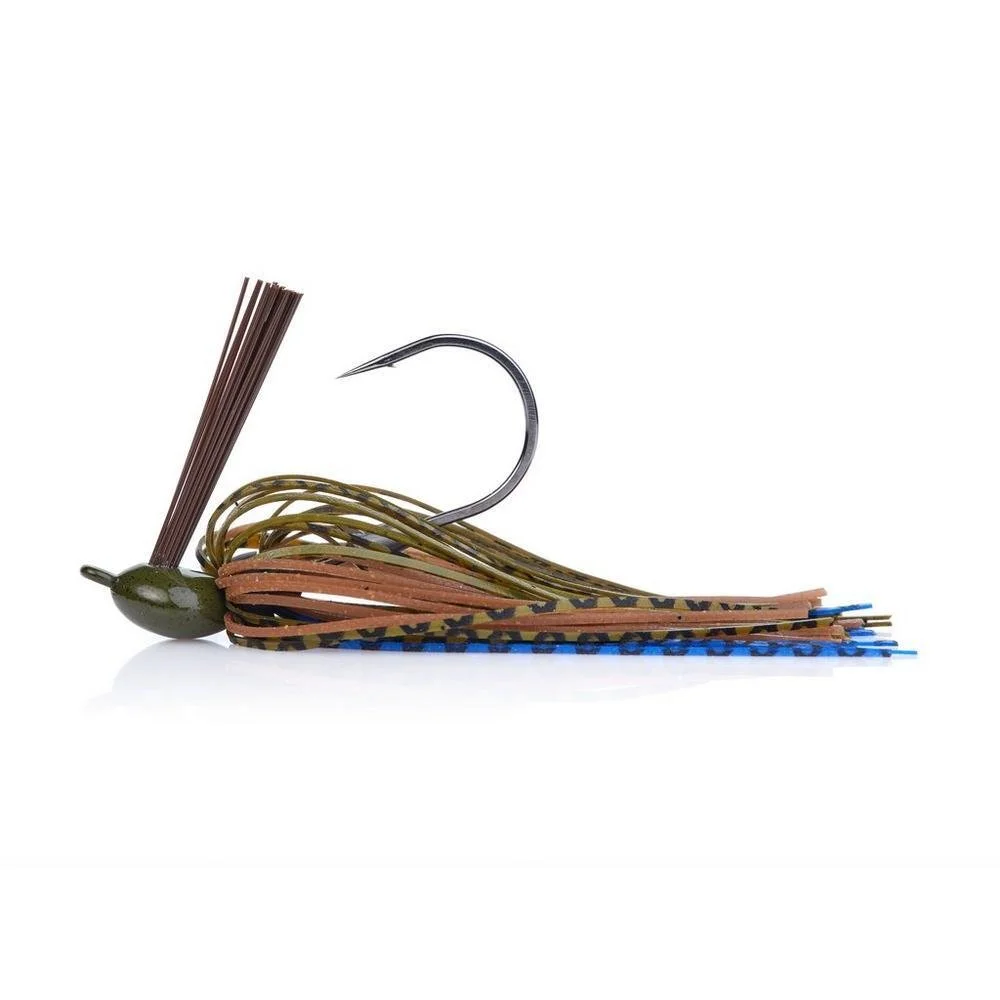
Living rubber skirts offer a natural movement when jig is sitting on bottom. This small material change adds a flared presentation to the bait when it is paused. It’s all about enticing curiosity and hunger!
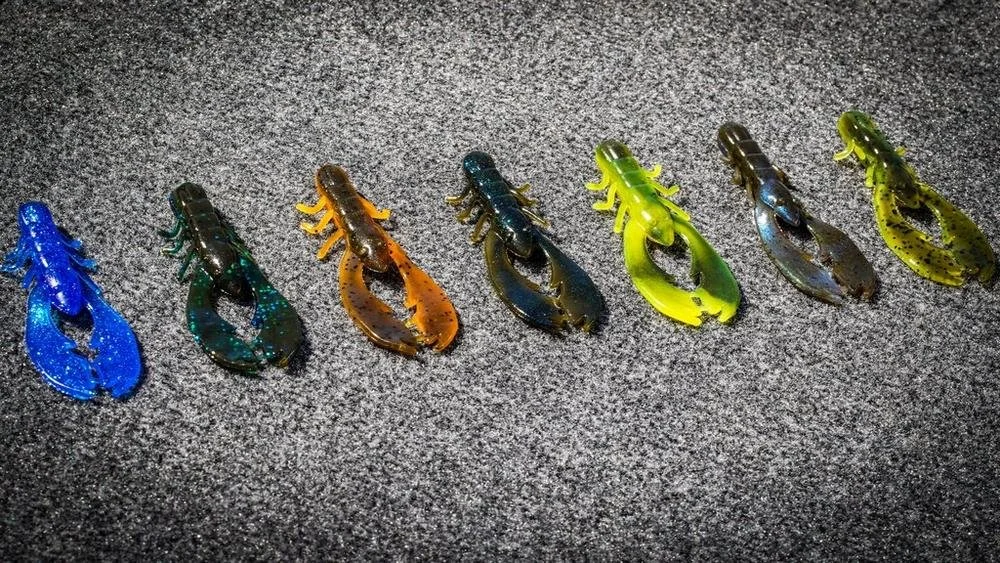
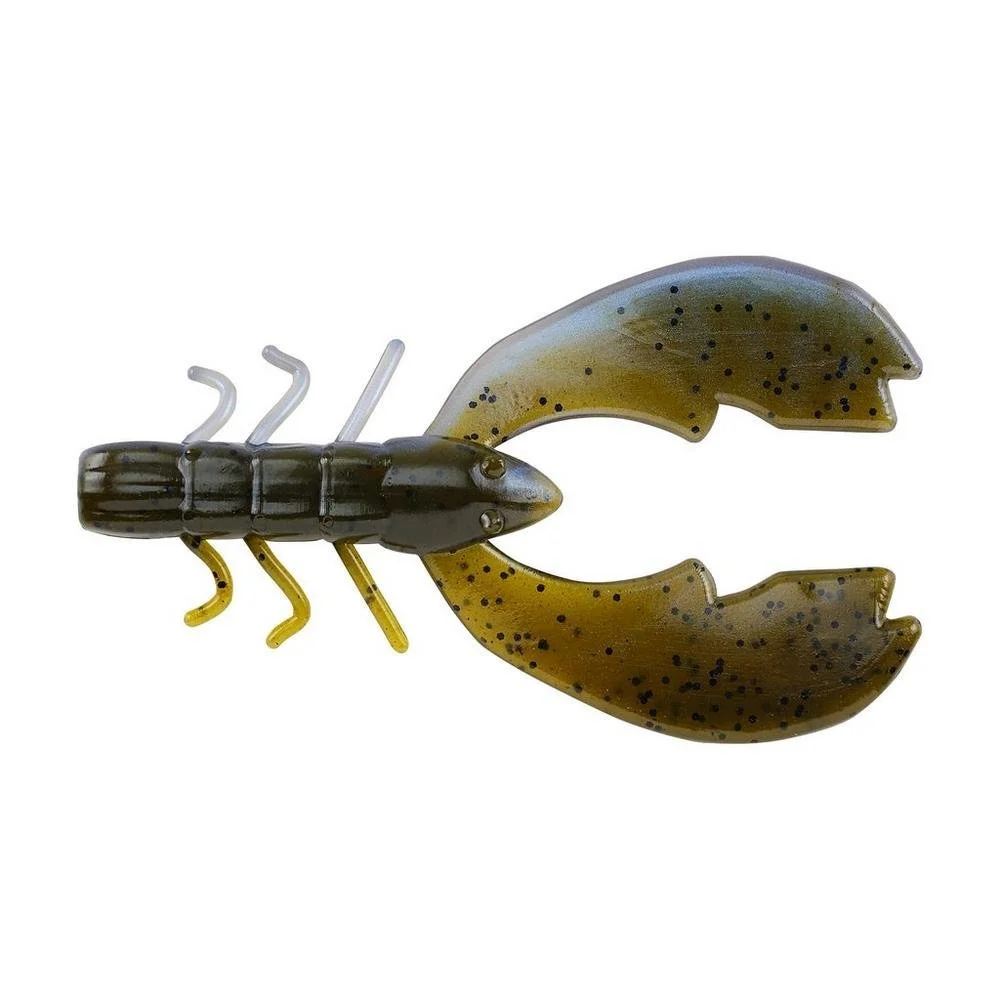
Jigs work year round-we know that. to best see success some fine tools for the approach should be considered. The action of the trailer mustn't be too bold and boisterous. a chunk Style or crawdad Style softbait mimics crawfish forage scuttling the bottom. because the bass will be nipping and pecking at the bait, keep in mind that the presentation is best when it is compact. casted out, let it hit the bottom, fish it slowly, and play with the retrieve. a hungry bass will see this bait and you will be able to detect when they pick it up off of the bottom. Cold water scenarios like this time of year are synonymous with slackline hook sets.
Lipless Crankbaits
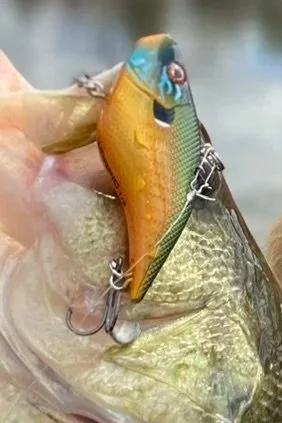
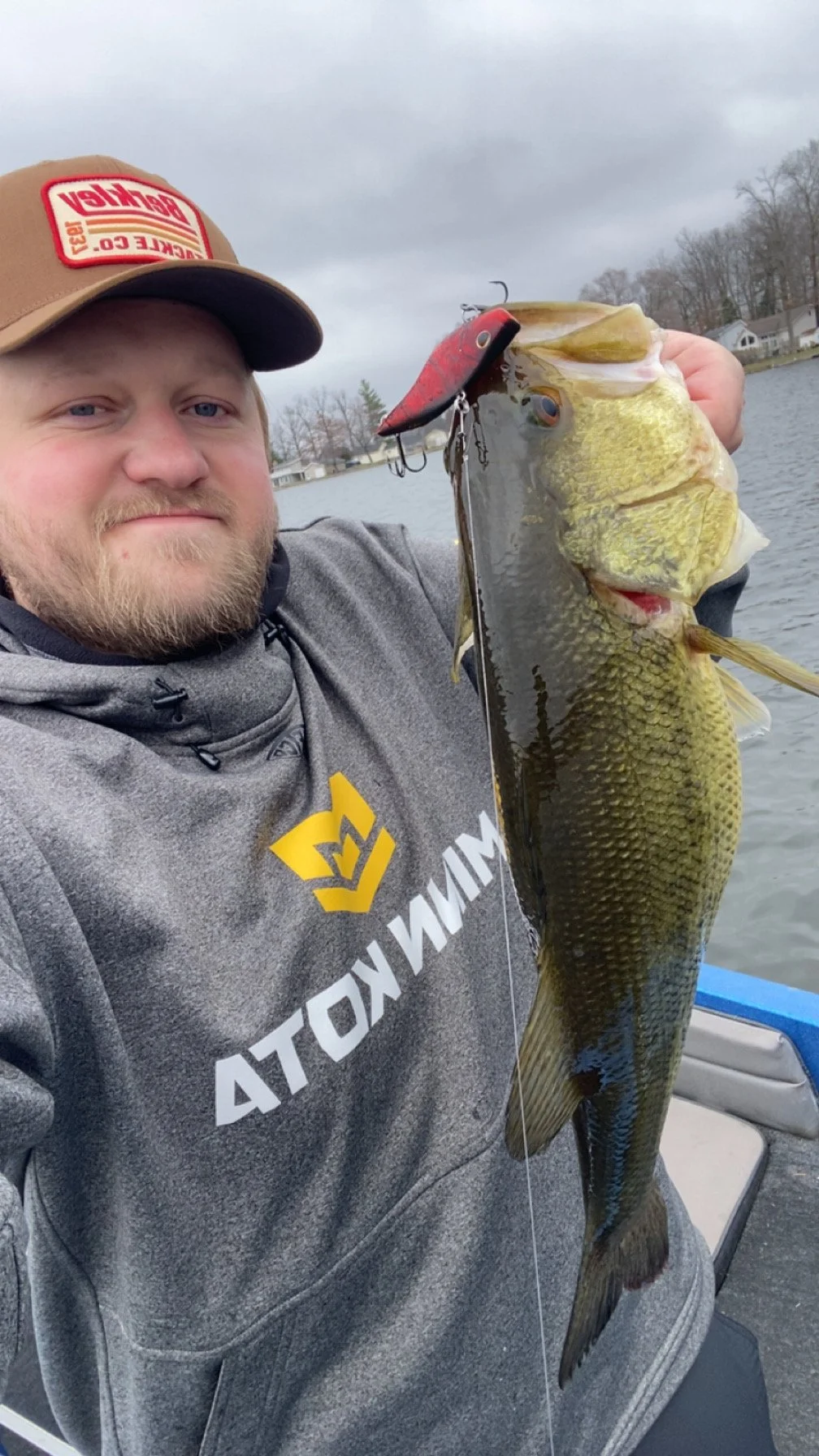
A lipless crankbait can be fished across the speed and depth column. All throughout the spring, a ‘trap’ as the OGs call it, can be absolutely dynamite because of its versatility. When the bass are lazy and laying low, they can take lazy swipes at it, and when things get really hot, they will smack the hell out of it. This time of year, they can be retrieved slowly, chugged and yoyo’d, and hopped along the bottom. Baits like the Berkley War Pig will resemble struggling forage. The rattle is an important piece to the equation. It can be what gets their attention and commitment. A lipless crank is an option that can truly be fished throughout the year. Match it to the color and size of the forage in your body of water, and it shouldn’t be long until the action happens.
Blade Baits
While most anglers put them away after winter, blade baits are a "secret weapon" for prespawn largemouth because they can trigger reaction strikes from lethargic fish in cold water of the early season when other baits are being ignored. During this transition, you should target "highway" staging areas can be used to mimic dying forage swimming along the bottom.
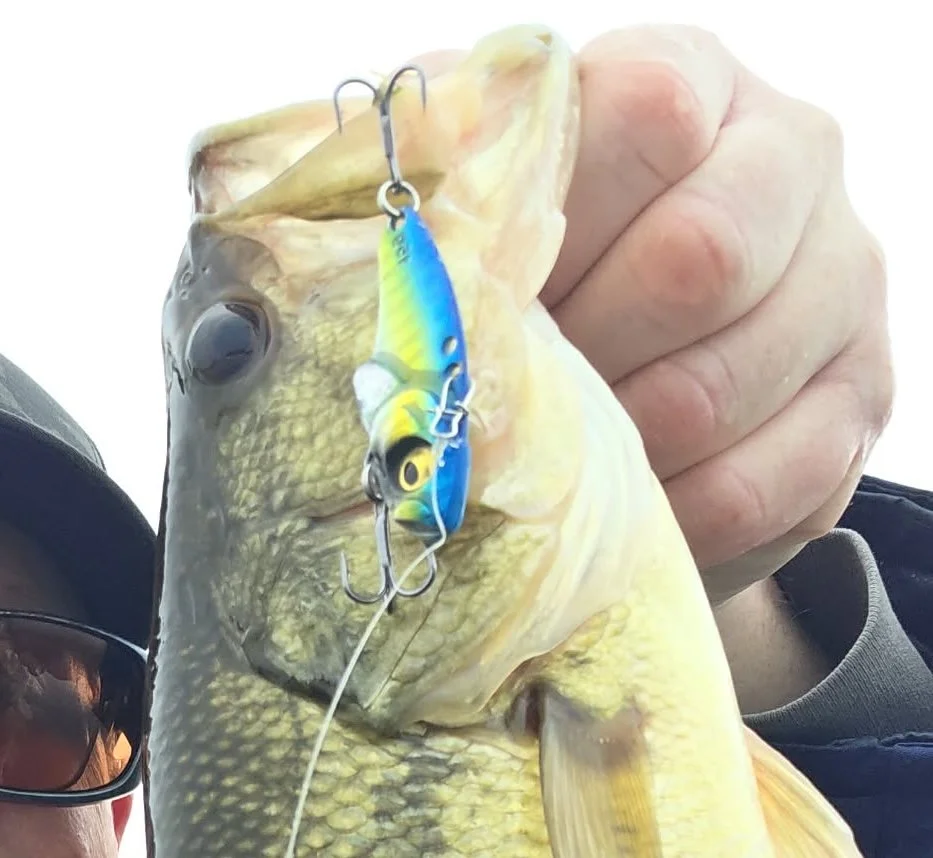
Blade baits are very similar to lipless crankbaits. They are known for shining bright when fishing deep or in cold water.
“I usually lift the bait 2-3 feet and let it drop on a semi-slack line. I sometimes let it lay on the bottom when the bite is slow. I’ve had bass eat them off the bottom. I also play with slower, shorter lifts and drops when the water is really cold and the bite is slow. My best overall blade bait over the years has been a Silver Flash Bullet Blade. They are made of tin so it looks bigger than it really is, resembling 3/4 oz at the half ounce weight.”
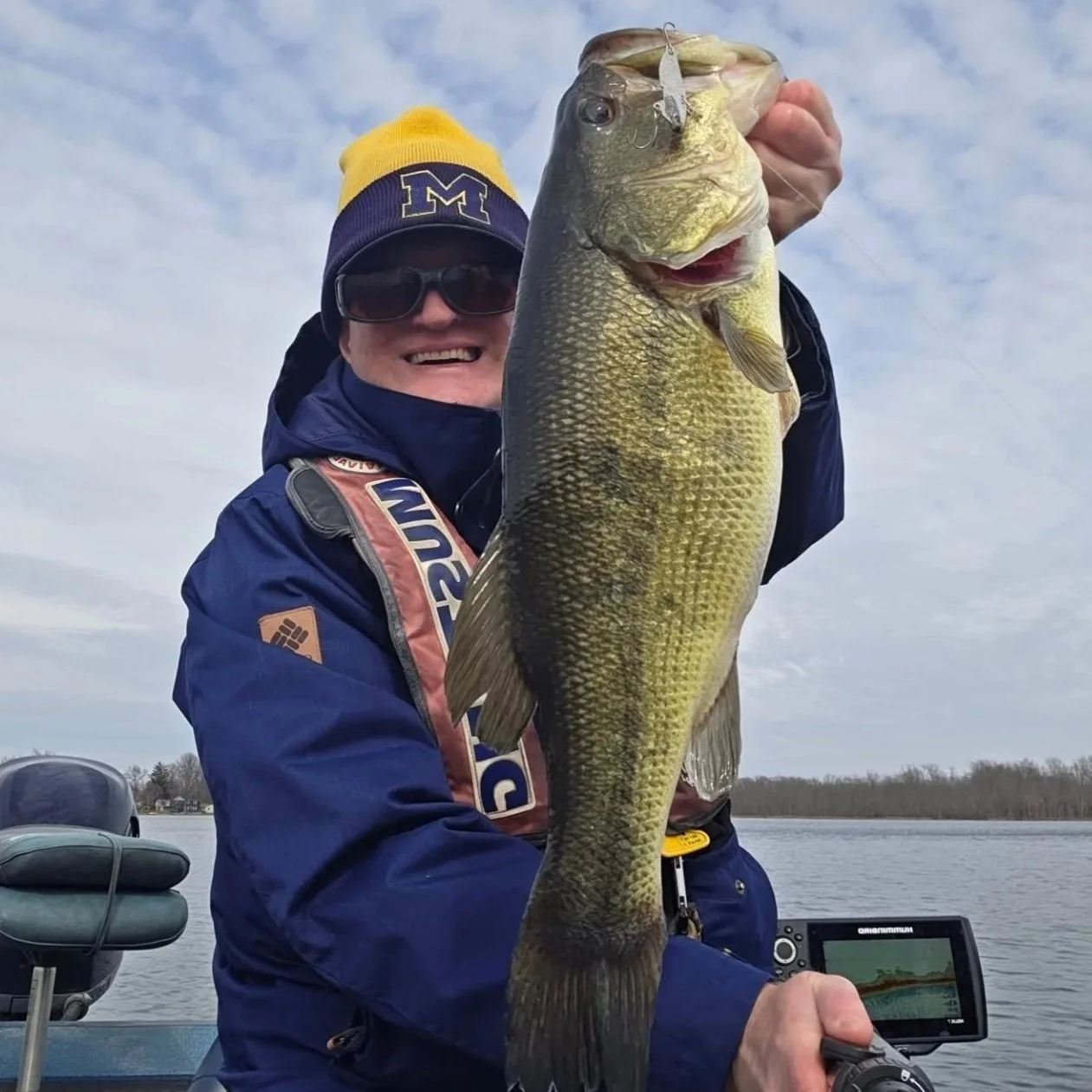
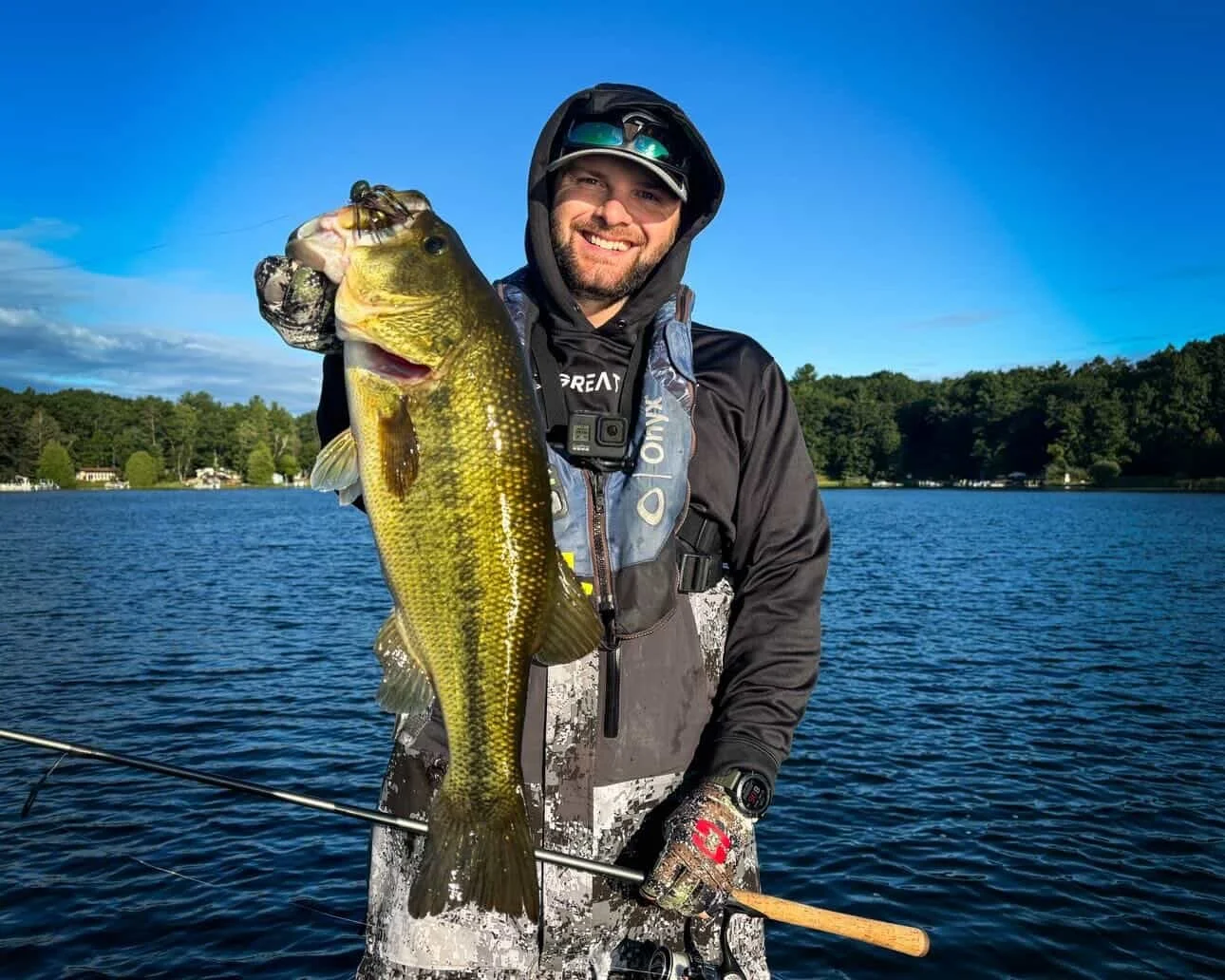
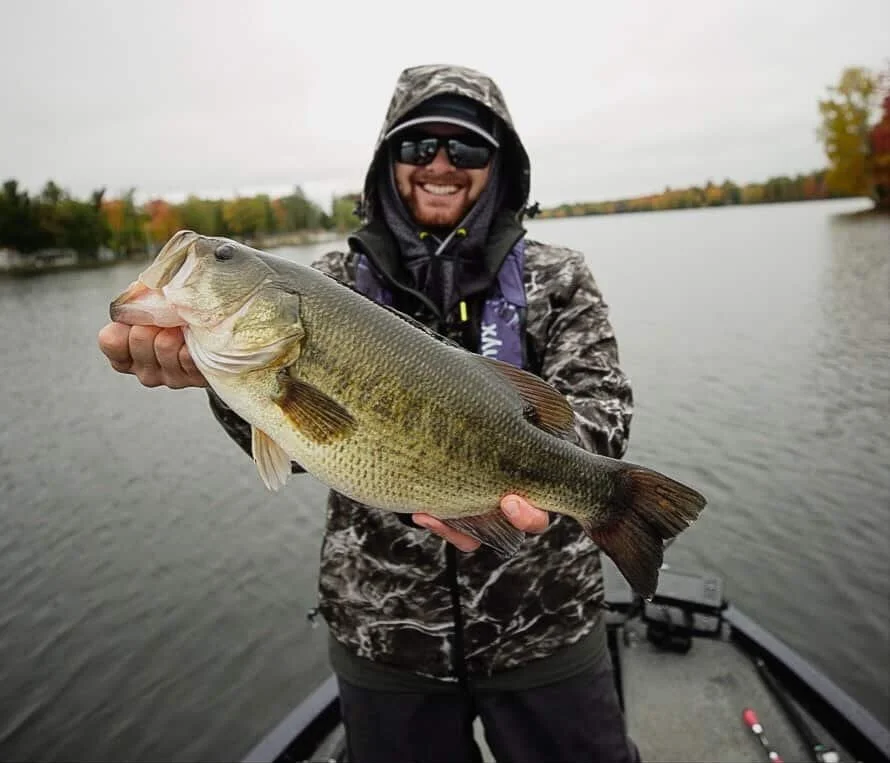
Dan Kimmel shows a big smile for a big bass caught on a bladebait. Dan is a passionate angler that has fished across North America and has built a reputation within the bass fishing. Follow him on Instagram @GreatLakesBass and read more at his website, GreatLakesBass.Com.
Flat-sided Crankbaits
A flat-sided crankbait is a thin-profiled diving lure with parallel sides designed to produce a tight, subtle shimmy that mimics a forage, making it particularly effective in cold or high-pressure water where a wide-wobbling, bold action might be too aggressive for their liking.
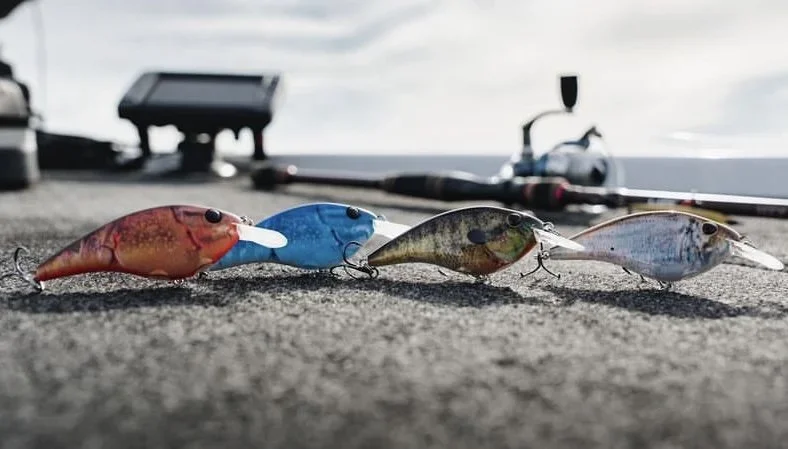
The Berkley Frittside is a stellar flat-sided crankbait option. The subtle action is realistic and enticing to hungry bass when some actions may be too much. (Photo Courtesy of Pure Fishing)
A flat-sided crankbait serves as a high-finesse alternative that can trigger a strike from even the most hesitant bass. To use one effectively, focus on making long, accurate casts near transitional areas like secondary points or shallow rocky ledges where fish are staging. Unlike the aggressive, erratic kick of a squarebill, these lures require a steady, rhythmic retrieve to maintain that signature tight shimmy, though you can often trigger a reaction by occasionally pausing or "turning and burning" the reel handle to simulate a startled baitfish. Because these thin-profile lures are often lightweight and aerodynamic, they perform best on a 7' or 7'6" medium-heavy rod with a moderate action, which provides enough "give" to ensure the fish can fully inhale the bait before the hooks set. To read more on these baits, check out this article here.
Jerkbaits
When you think about the ultimate coldwater bass lure, the jerkbait is arguably the most popular across the country. The best jerkbait anglers know what it takes to be committed to using one the right way. Anybody can fish a bait slowly, but it takes some patience to let a bait suspend on long pauses (30 seconds or even more!).
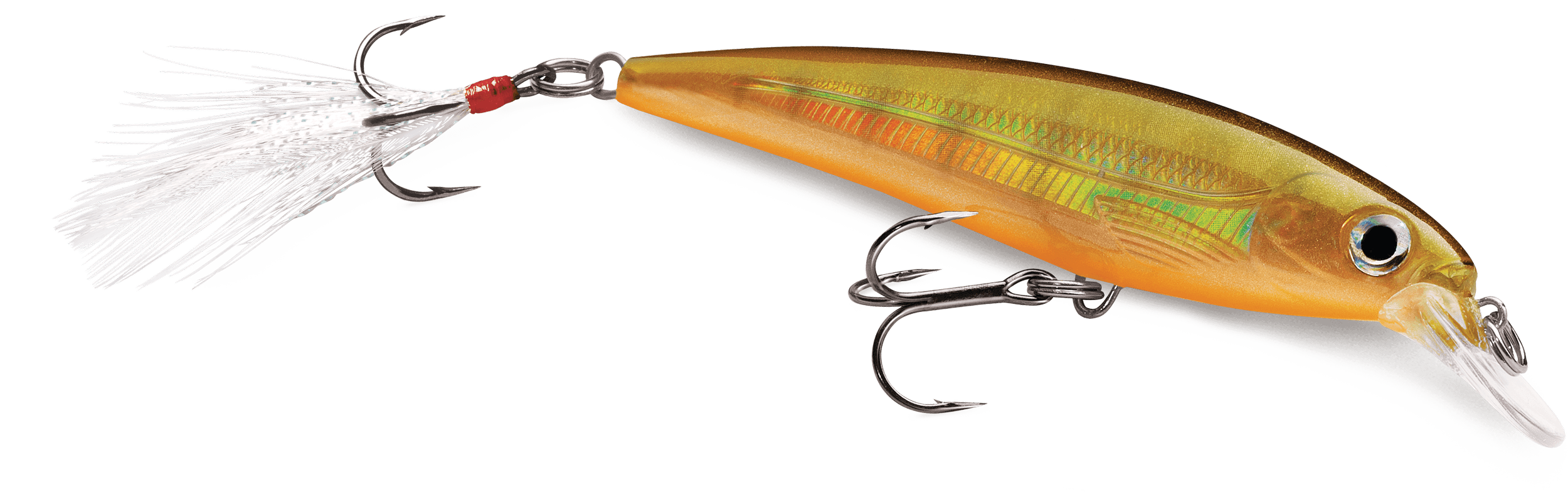
The Rapala X-Rap is a favorite for anglers across species, especially cold water conditions for bass. (Photo courtesy of Rapala VMC)
“For those new to using a jerkbait, focus especially on the part of the retrieve where it glides or coasts on a slack line after the snap of the rod tip. If you don’t leave enough slack, the lure can’t glide.”
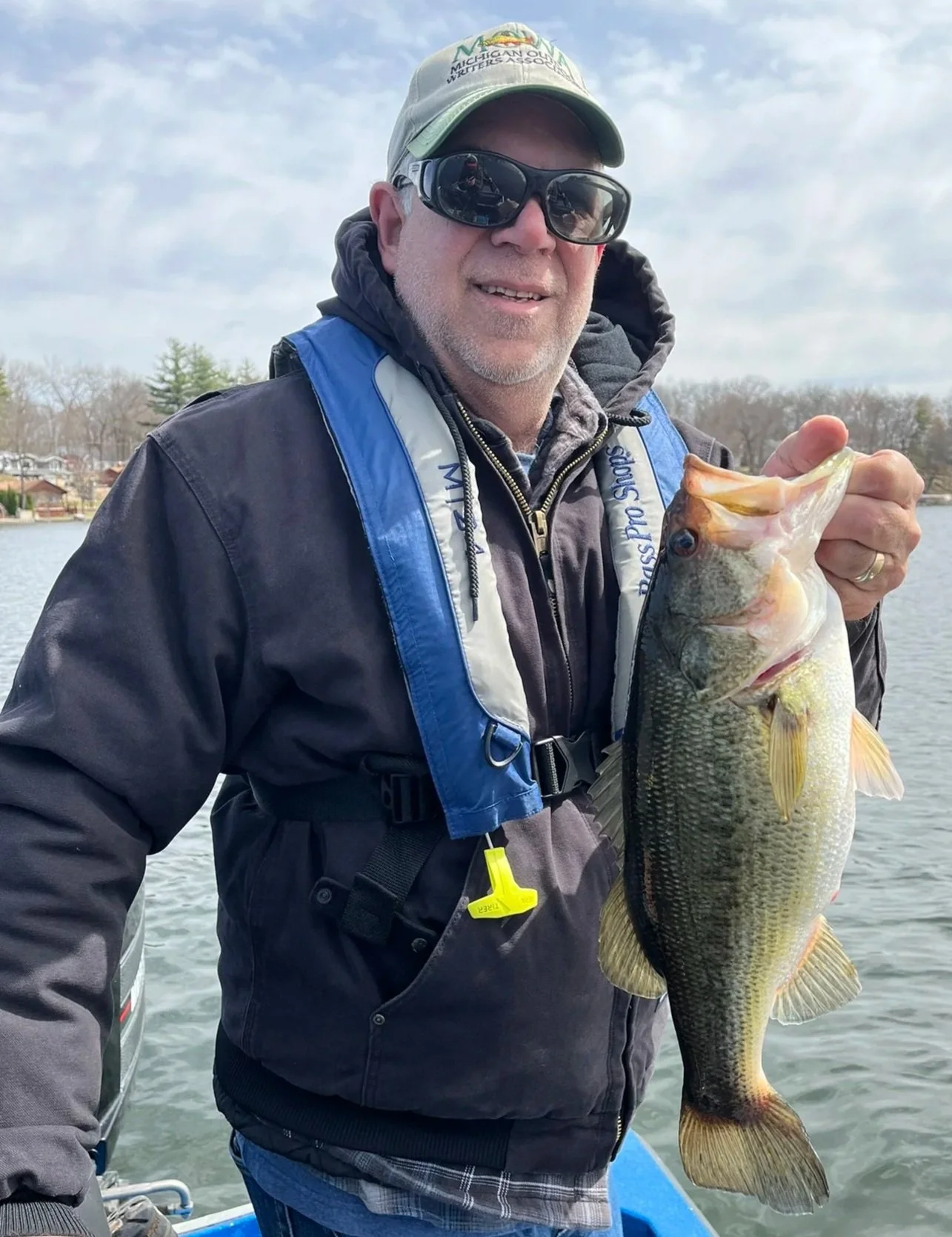
Jeff Nedwick is a critically acclaimed outdoor writer from Michigan. He has jerkbait skills and major confidence in the Rapala X-Rap Minnow in natural bait tones.
Outdoor writer and great guy in general, Jeff Nedwick, is a true believer of the jerkbait. He shares that understanding the motion of the bait itself is key. You must snap the rod tip against a slack line rather than pulling it directly, creating a sharp "pop" that maximizes the lure’s lateral kick. This initial slack prevents the bait from being dragged forward, allowing it to dart. By focusing on the glide - the part of the retrieve where the jerk bait glides or coasts on a slack line after the snap of the rod tip. If you don't leave enough slack, the lure can't glide.
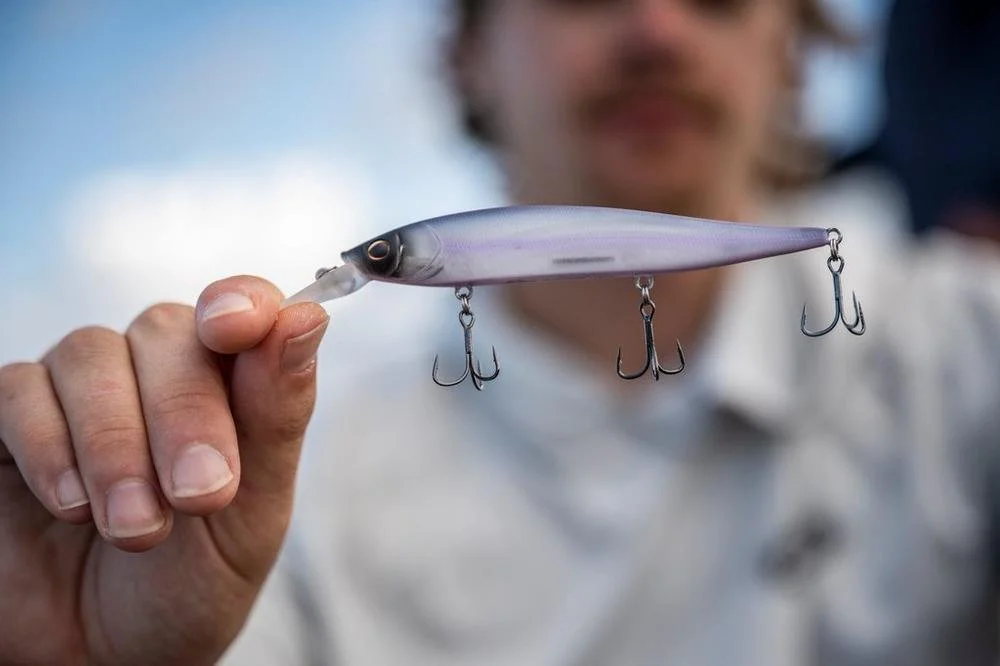
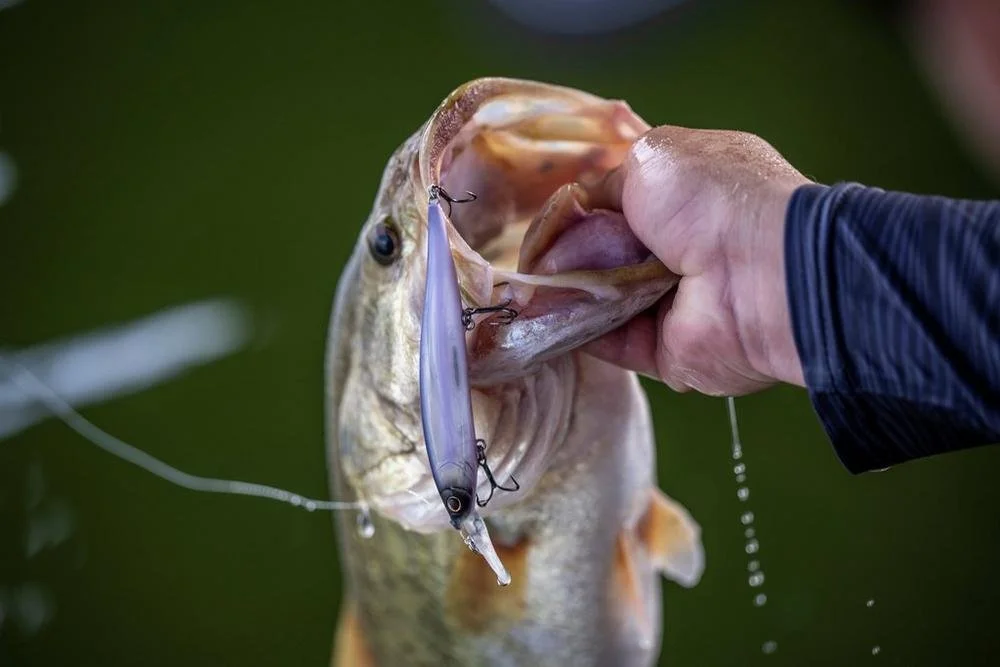
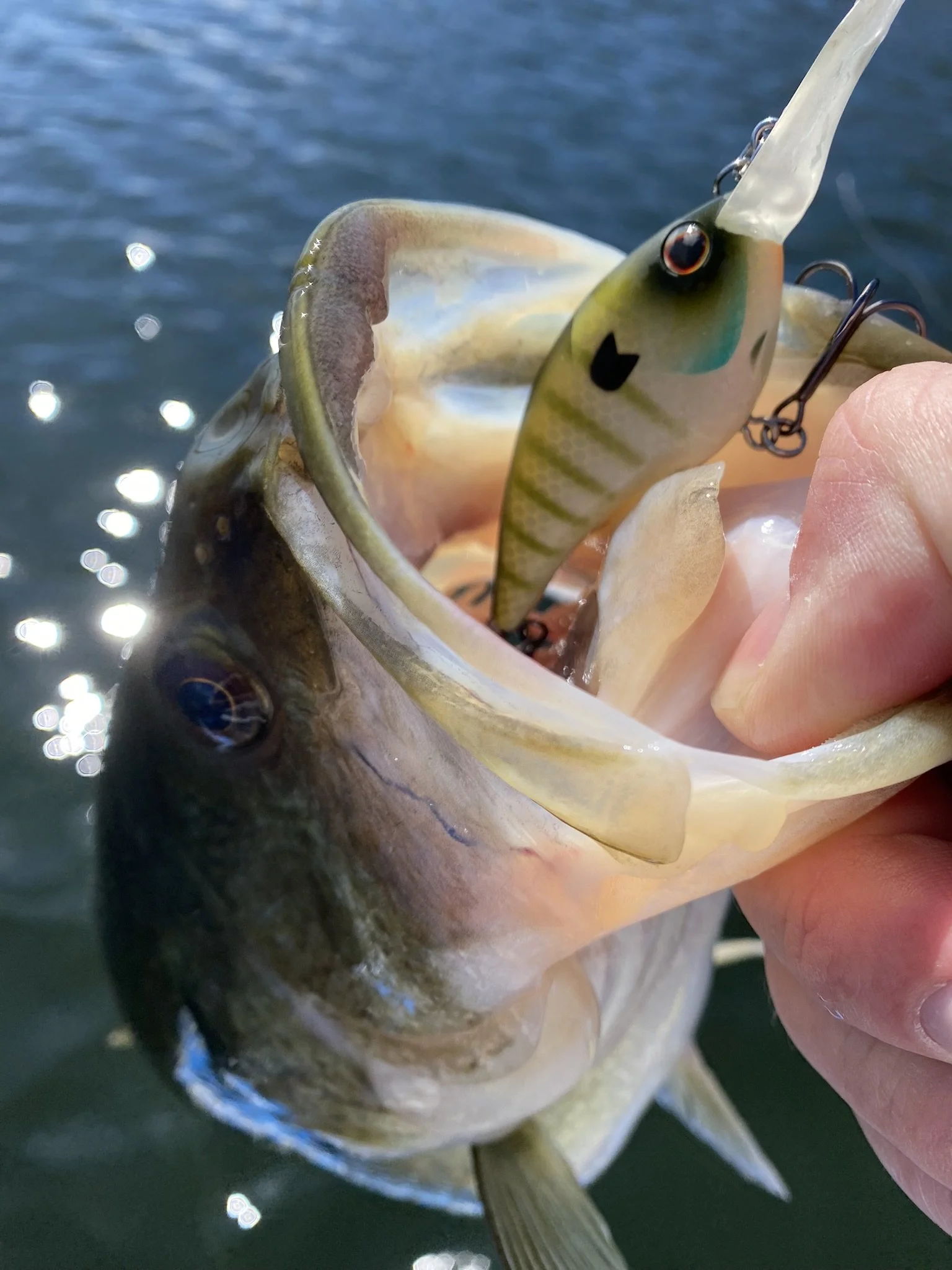
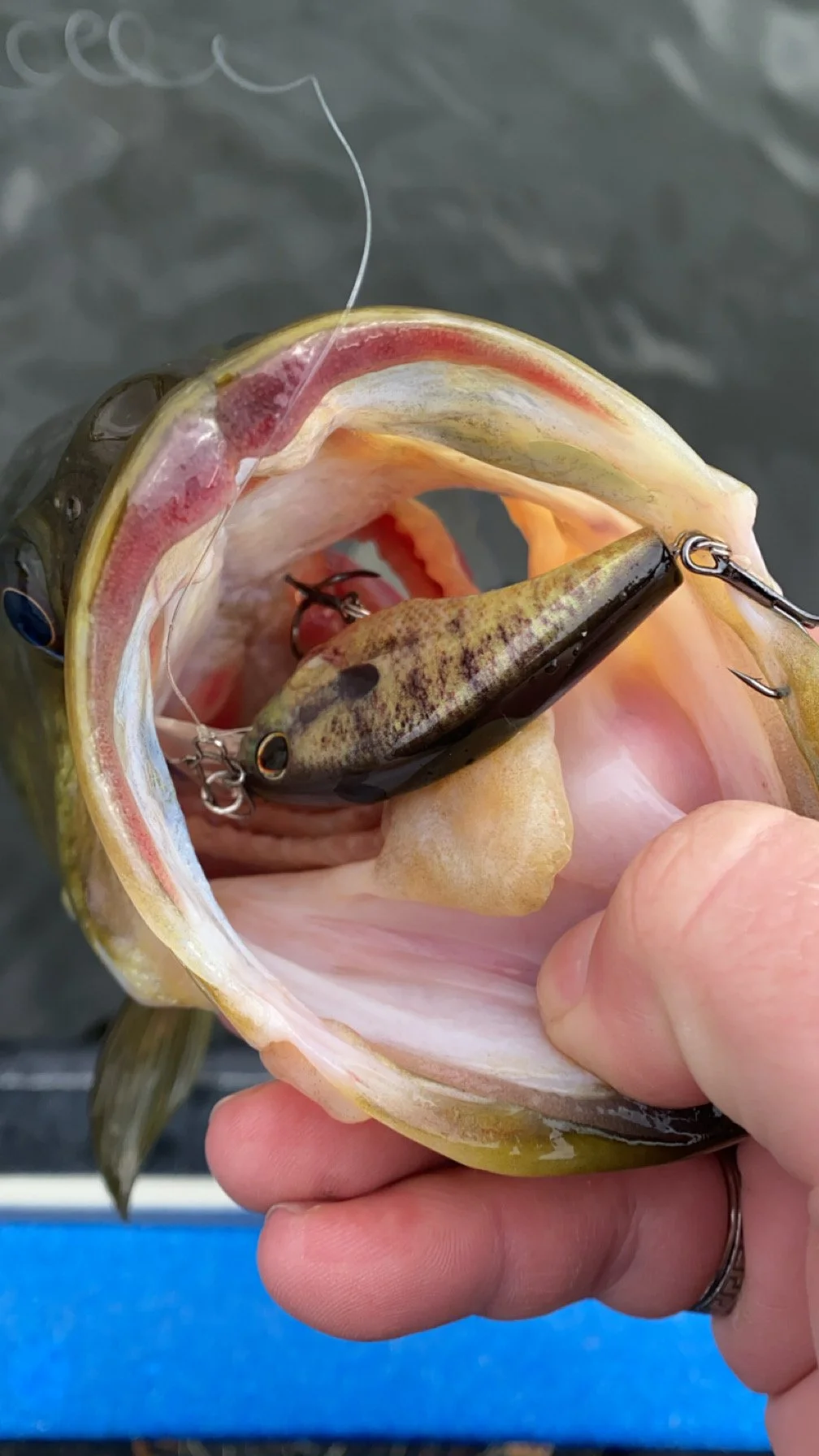
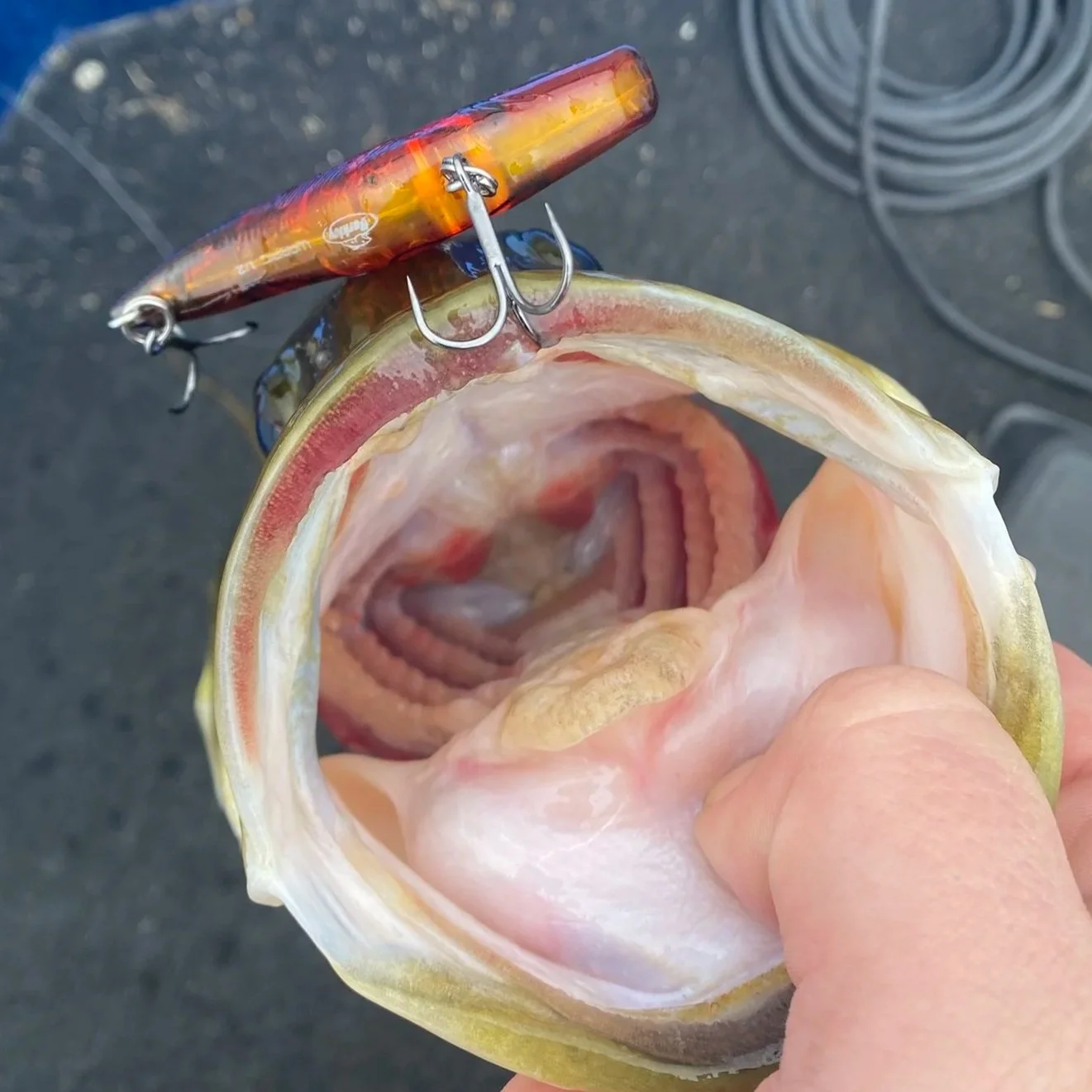
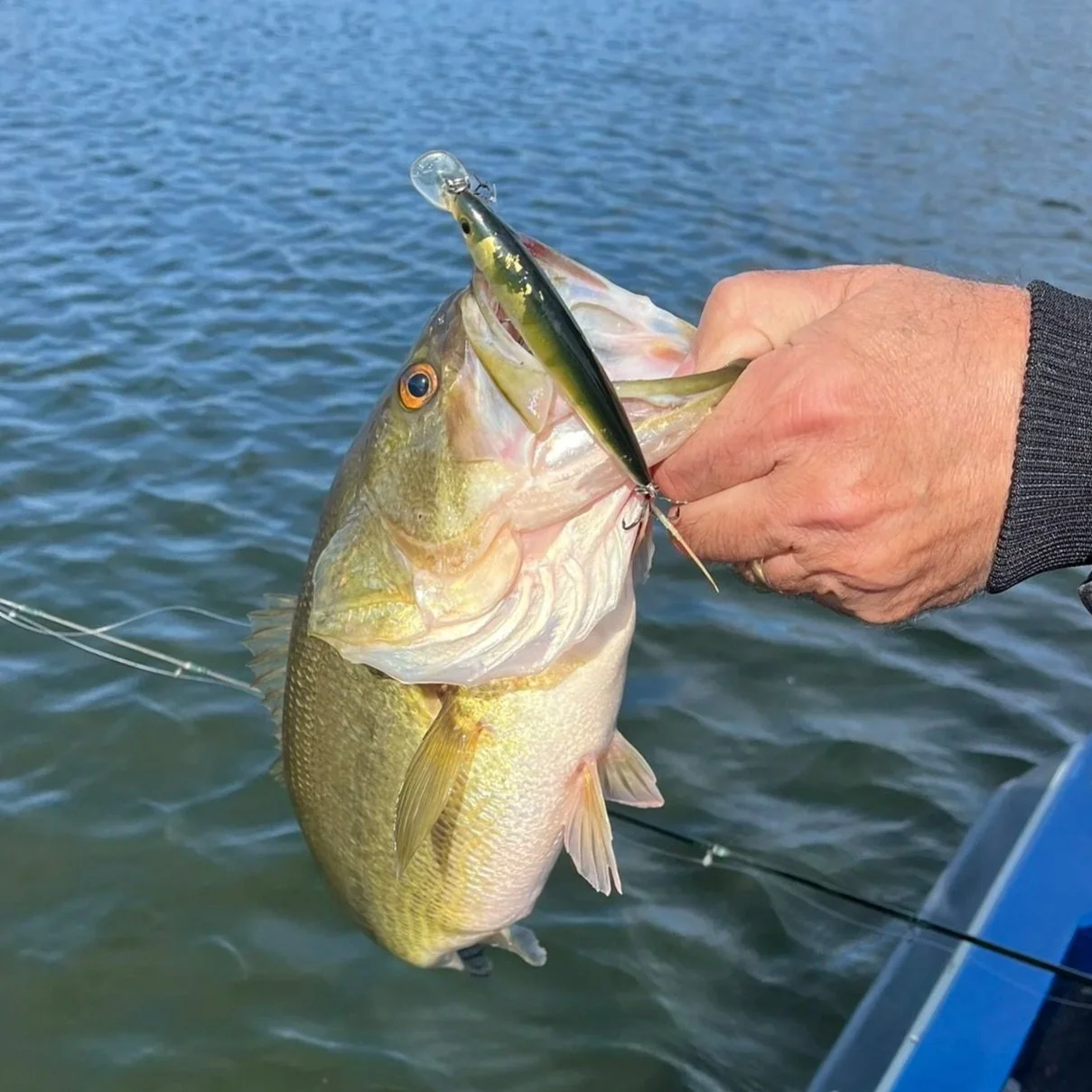
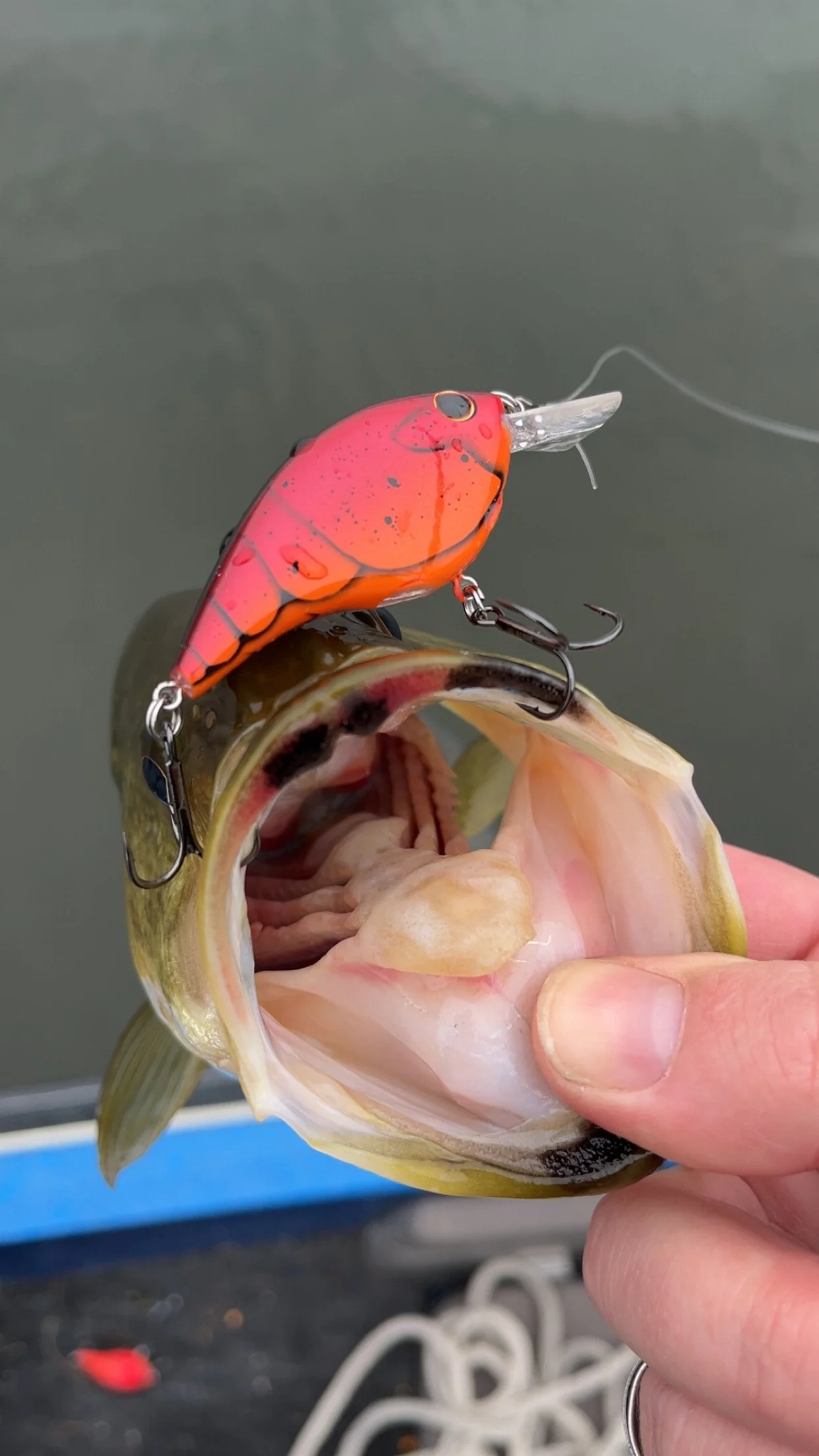
Above: The Berkley Stunna has exploded in popularity as a jerkbait option over recent years. Photos Courtesy of Pure Fishing (1,2) and Ben Nowak (3).
When success prevails, identifying how the fish struck your presentation can be a tip in itself to how you should be fishing. Did you feel the bass ‘bump’ the bait and you got one hook into the snout? Or did the rod load up and it was hooked so good you were not worried it would come off? This information will allow you to tune your retrieve accordingly. Hypothetically, if a bass is bumping and nipping at a lipless crank or blade bait on the bottom, a compact jig fished slowly can be a great option. If you are slowly working a flat-sided crank and you are getting short strikes, a jerkbait would be a good option to fish more slowly with pauses. Let the fish speak to you and take their order for how they want it delivered.
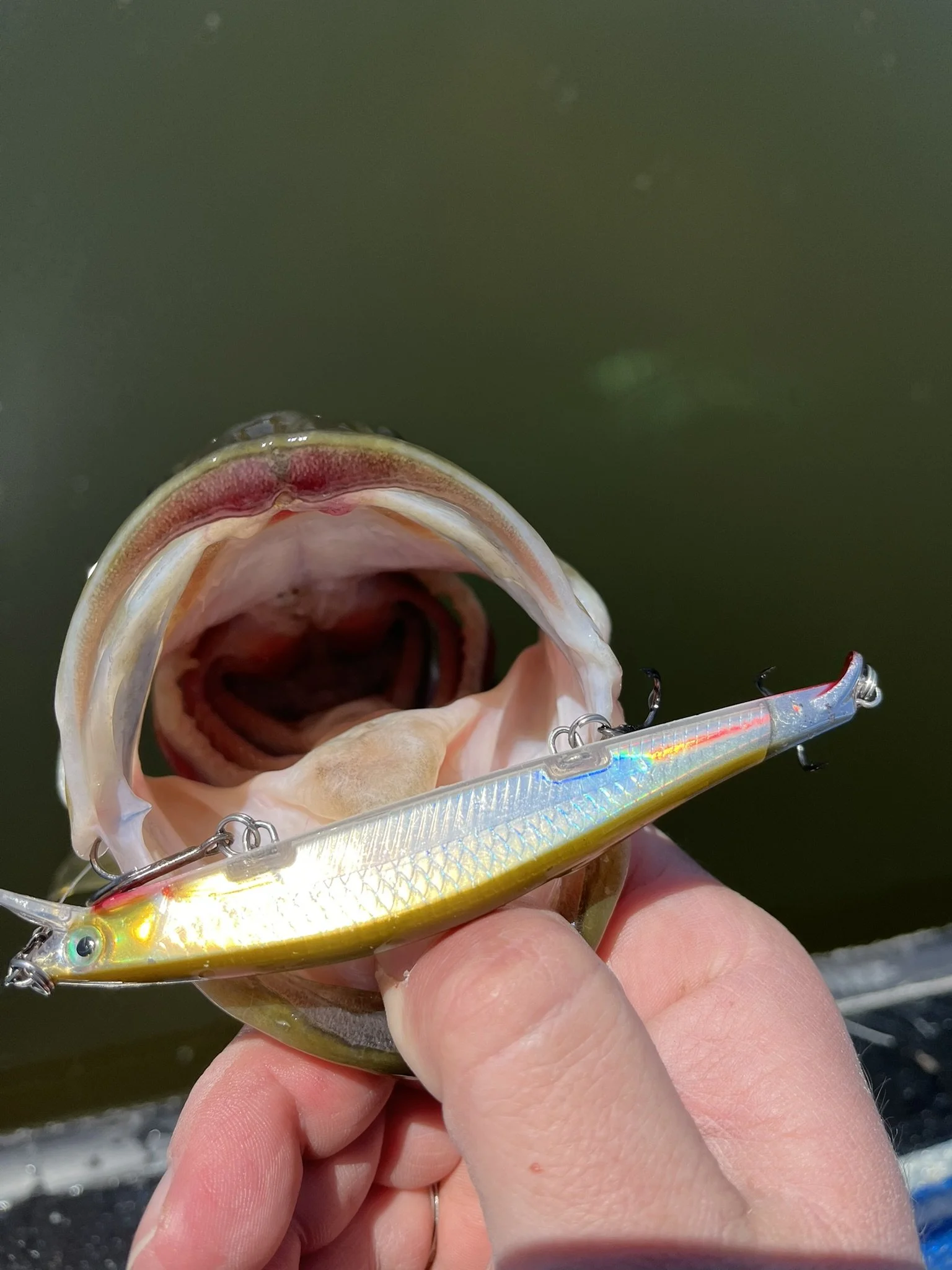
Throughout your time on the water this season, do not be locked into one pattern. Having versatility and the ability to adapt is one of the most important pieces to being a successful bass anglers in the early season. This is not only by cycling through spots and visiting them throughout the day after the sun has been on them, but also the baits you have tied on. When you find fish that are biting, having options can sometimes prolong the activity on a spot. Once you figure out what fish are related to, you can slow down, pattern fish, and run a route around the lake. Pay attention to small details. What was water temp vs other areas where I got those fish?; what cover did I notice? What depth was I in and what did the contour look like where I was casting?
The prespawn and early season may feel a little intimidating when it does not have to be. After a long winter you may be going stir crazy, just wishing for the first chance to hit the water. Just because the water is still cold does not mean they are not biting yet. Those fish are biting and have been eating all winter. Adjust your approach, enhance your understanding, experiment, and build confidence in the process- that is how you will come out on top and be successful in your first trips of the year. Who knows, you just might crack one of the largest bass of the year or your life.