

Late Season Spoon Science: Studying clicks, ticks, and vibration
What is going on this time of the year? Anglers may find themselves asking in a mid to late-season slump. The ole dreaded ‘finnicky’ February rolls into late winter. Fish come in and are sluggish to bite or they are intimated by action. So what is going on? Let’s think about the water.
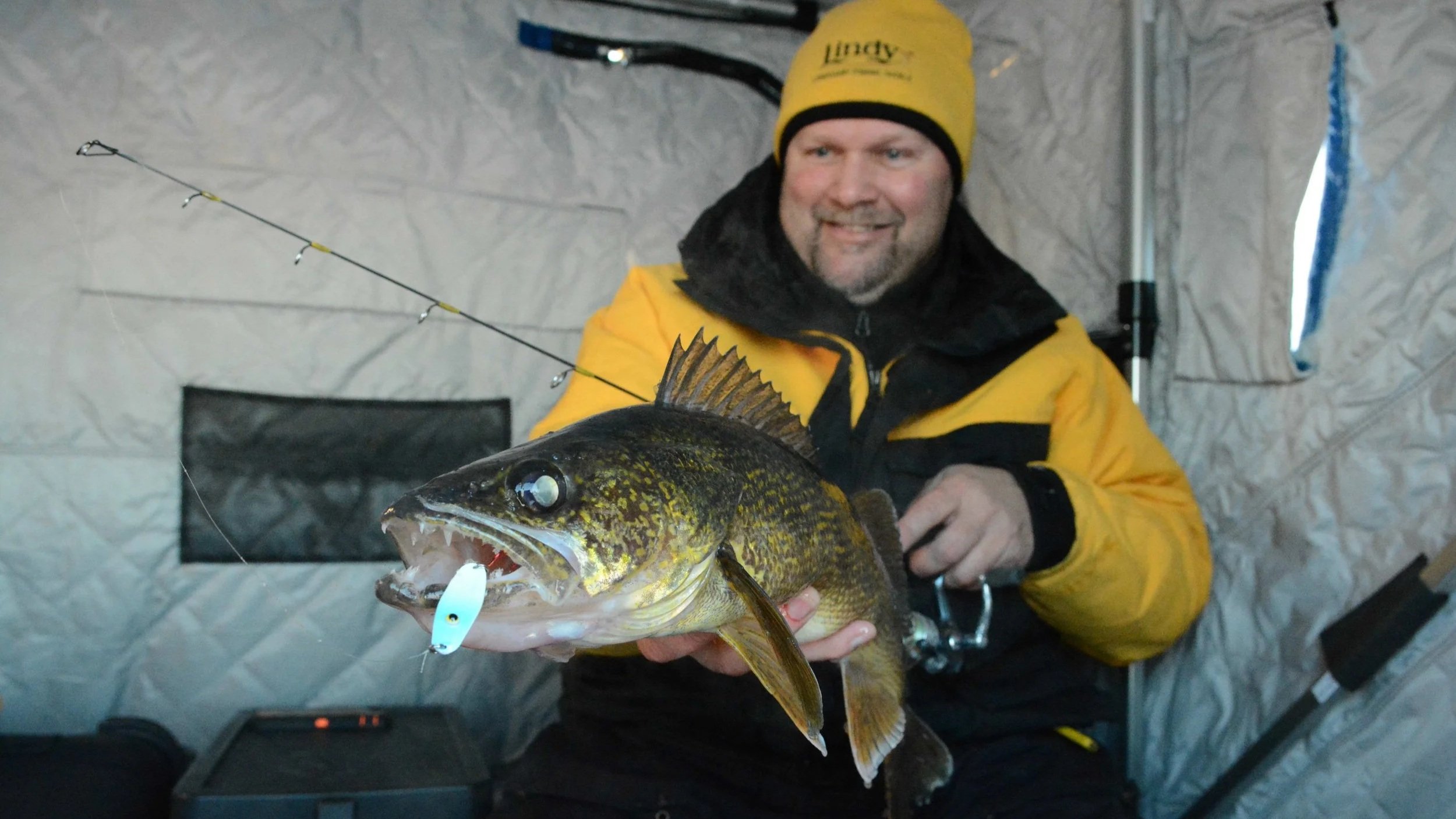
The Lindy Quiver Spoon, available in silent and rattling, is made up of a lightweight metal to create a slow, tantalizing action. (Photo Courtesy of Lindy Fishing Tackle)
In cold winter conditions, water is the most dense it will be throughout the year. Because of this, sound travels differently. Additionally, the ice acts as a hard water ceiling. It is eerily quiet beneath the surface. The ice on the surface reverts sound waves, like an acoustic lid. Sound made under the ice bounces off of the bottom and the ice on top. In the summer, the water has different temperature layers that dampen/break up sound, especially at the surface. Think of the cold water being uniform where there is little to no interference in a quiet chamber.
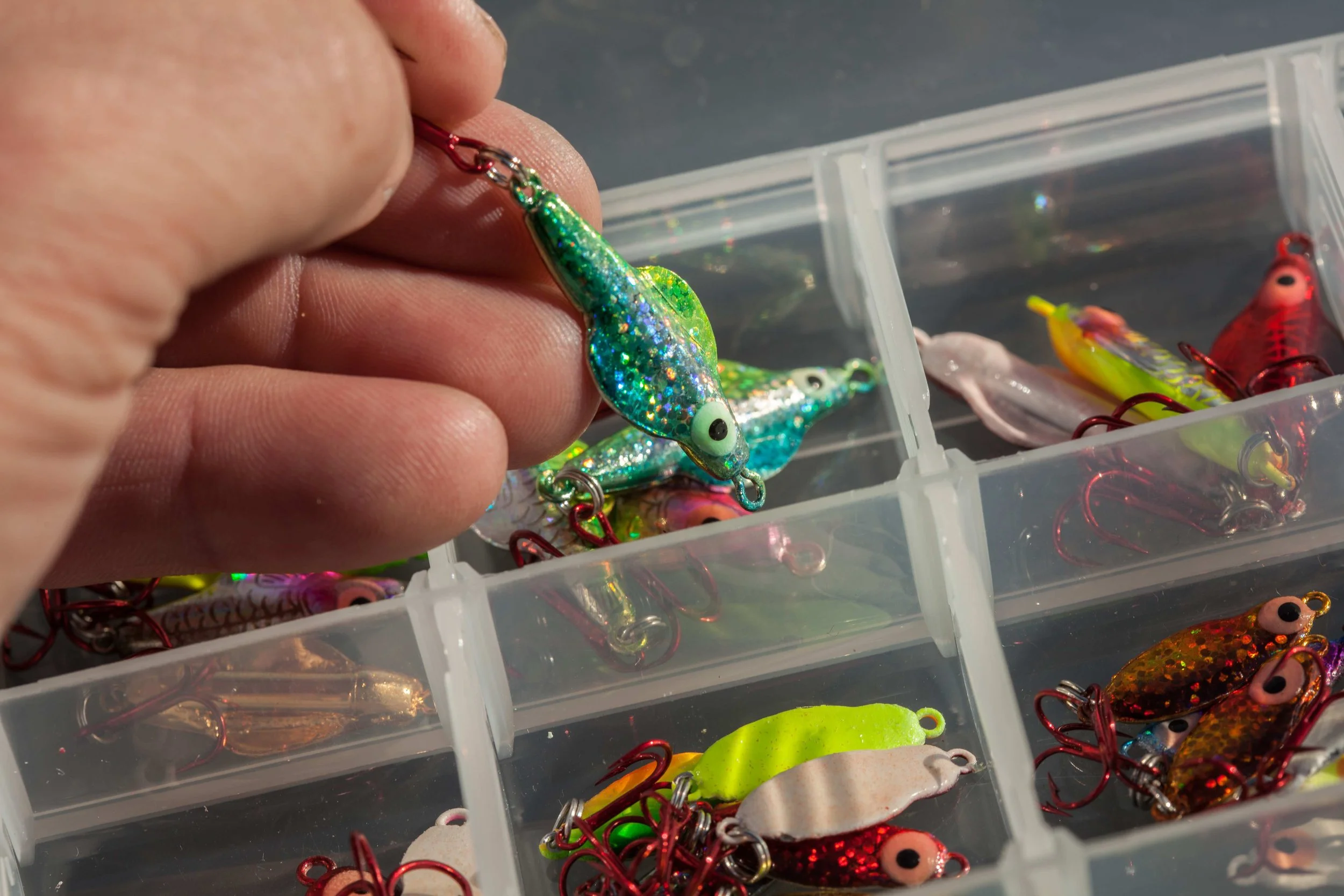
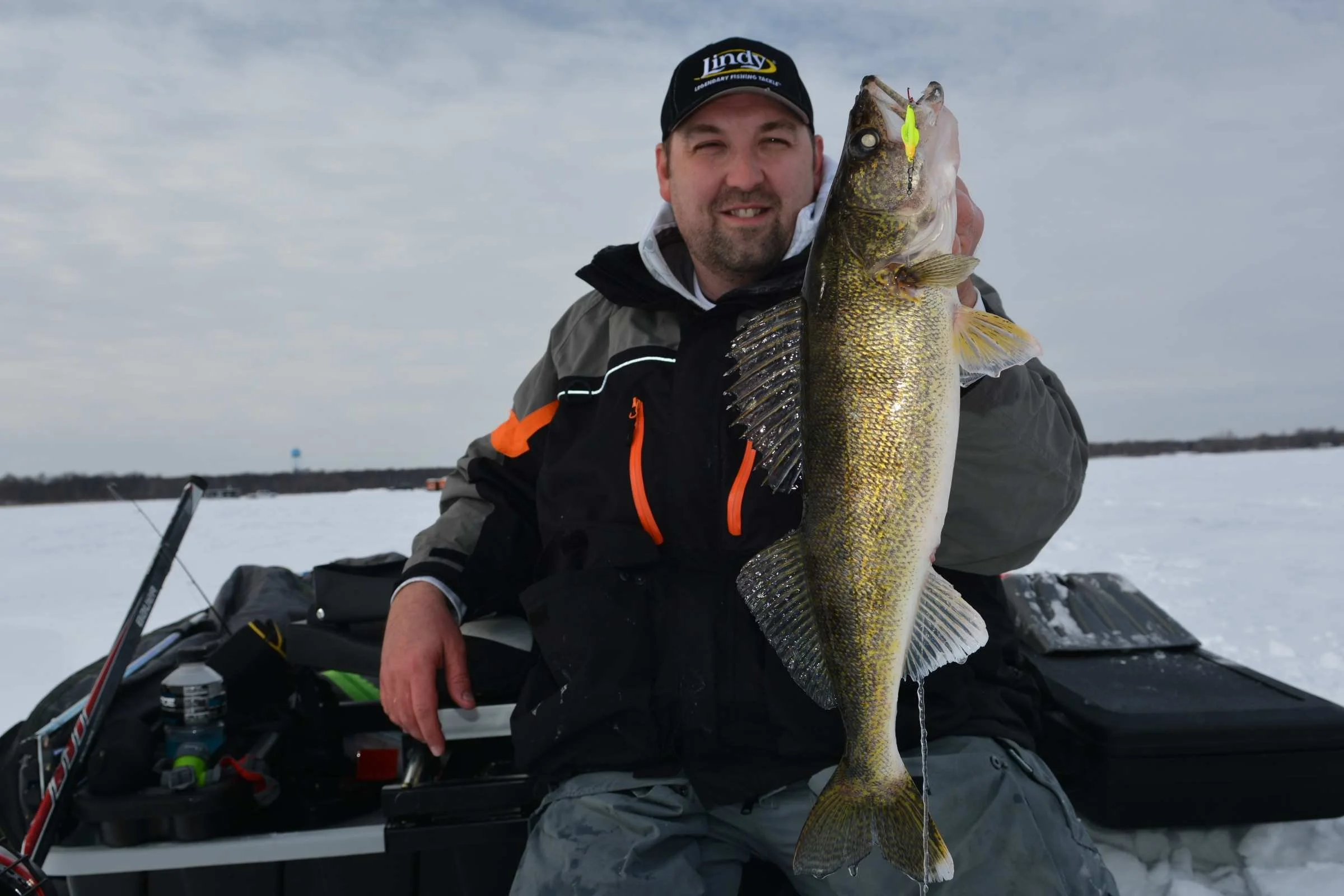
Above: The Lindy Rattl’n Flyer is a favorite to many. The gliding action and brass rattle get the attention and entice hungry walleye and game fish. (Photo Courtesy of Lindy Fishing Tackle)
As sound is broadcast, it calls out to where fish can respond and pinpoint to it more immediately. To a fish, sound produced in a bait, like in a rattle of a jigging spoon, is detected by the lateral line within the anatomy of a fish’s nervous system. They feel the sound in the same way we can feel being tapped on a shoulder. Not all sound is equal. Some material creates sound and vibration that travels further than others.
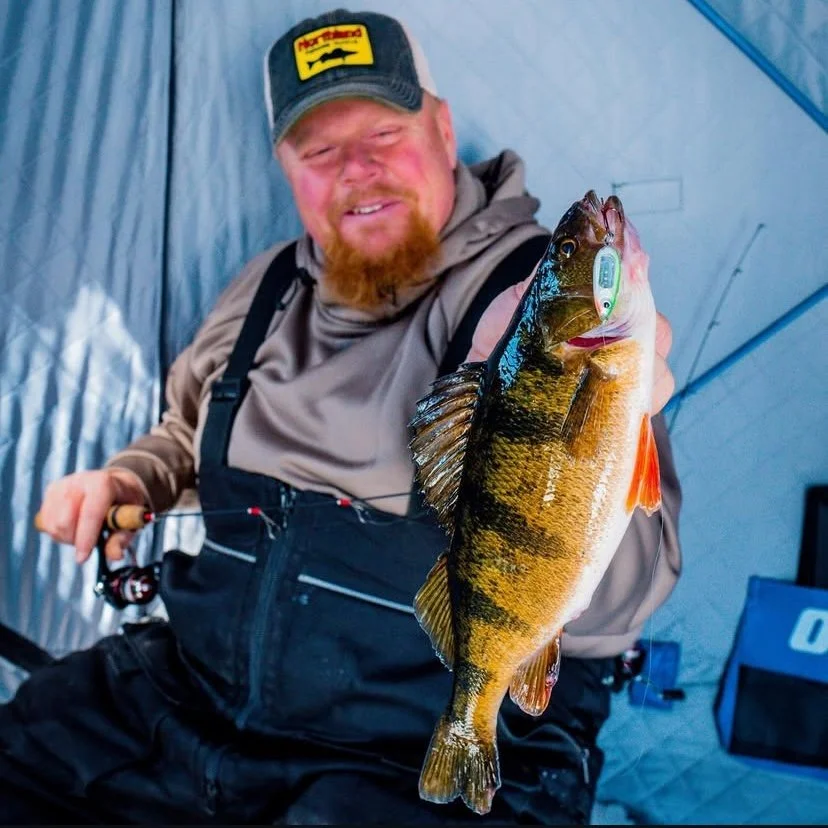
Brian “Bro” Brosdhal shows off a marvelous perch taken on a Glass Buck Shot Rattle Spoon (Photo Courtesy of Northland Tackle)
The volume and frequency of a rattle is dictated by the material's density. Tungsten is the loudest and sharpest because its extreme density allows it to strike the housing with maximum energy, creating a high-frequency "clack." Stainless steel offers a bright, mid-range "tink," while brass is softer and produces a lower-frequency, resonant "thud." Glass is the quietest and most subtle, producing a very high-pitched, brittle “click” sound that lacks the "punch" of metal.
So frequency is the scientific measurement of how fast a sound wave vibrates, measured in Hertz (Hz), where more vibrations per second result in a higher pitched sound. Pitch is the biological perception of that frequency—how our brains (or a fish's brain) interpret those vibrations as being high or low. Underwater, these sounds travel roughly 4.5 times faster than in air, making the acoustic signature of different materials much sharper and more immediate.
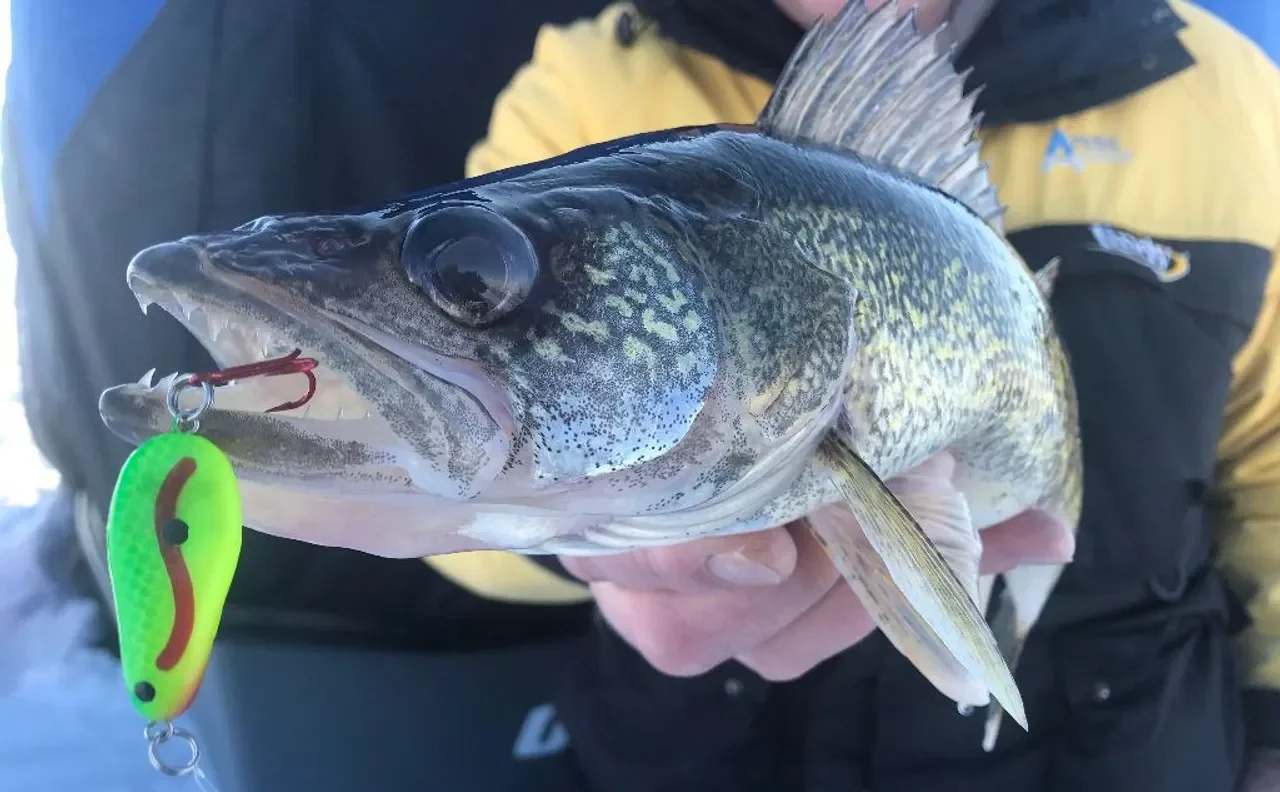
Featuring a glow stick chamber and a tungsten rattle system, the Lindy Glow Spoon is engineered to find fish in the dark. (Photo Courtesy of Lindy Fishing Tackle)
While Tungsten is the loudest at the source due to its sheer volume, Brass technically travels further in terms of wave integrity. High-frequency sounds (like those from tungsten or glass) are absorbed by water molecules more quickly, causing them to dissipate over distance. Low-frequency sounds (like the duller thud of brass) maintain their energy longer as they travel, much like a low-pitched foghorn carries further through the mist than a high-pitched whistle.
Fish do, in fact, have hearing abilities. While they do not have ears like us, they do have ear stones called otoliths. A fish hears a rattle through two distinct systems: the inner ear for high-frequency sounds and their lateral line for low-frequency pressure. The lateral line consists of sensory neuromasts that detect the physical displacement of water. Because of this, a fish doesn't just hear a brass or tungsten rattle; it feels the vibration against its body like a physical pulse. This tactile sense allows them to triangulate the exact position of the sound far more accurately than a human could underwater.

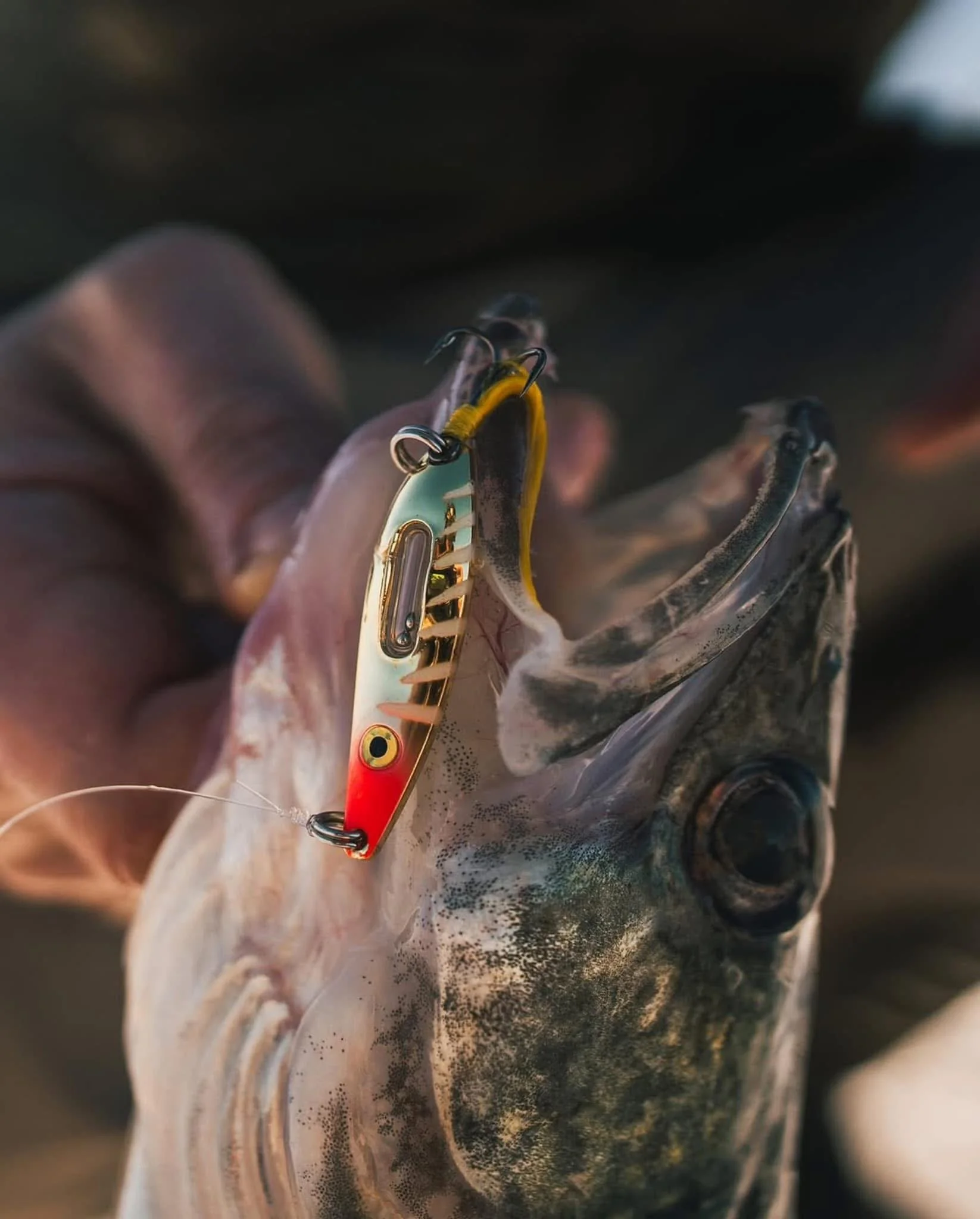
Above: The VMC Rattlin Roach Spoon is a bait option that offers an exposed glass chamber, a variety of color patterns including glow/UV, and a Marabou dressed treble hook. (Photo Courtesy of Rapala VMC)
Comparing a human's experience to a fish is like comparing audio to touch. For a human, sound is mostly something we hear in our heads, and it is difficult to locate underwater. For a fish, a rattle is a whole-body experience, similar to a human standing in front of a massive concert subwoofer where they feel the "kick" of the sound waves in their tissues. While we rely on ears to interpret a "tink" or a "thud," a fish uses its entire side to hone in on the location of the bait by skilled detection of sound and vibration.
Sound factors can be similar between talking, shouting, and blowing a whistle. All sounds have their own time and place. Different factors in sound mechanics are centered around material of the bead, bait, and rattle compartment.
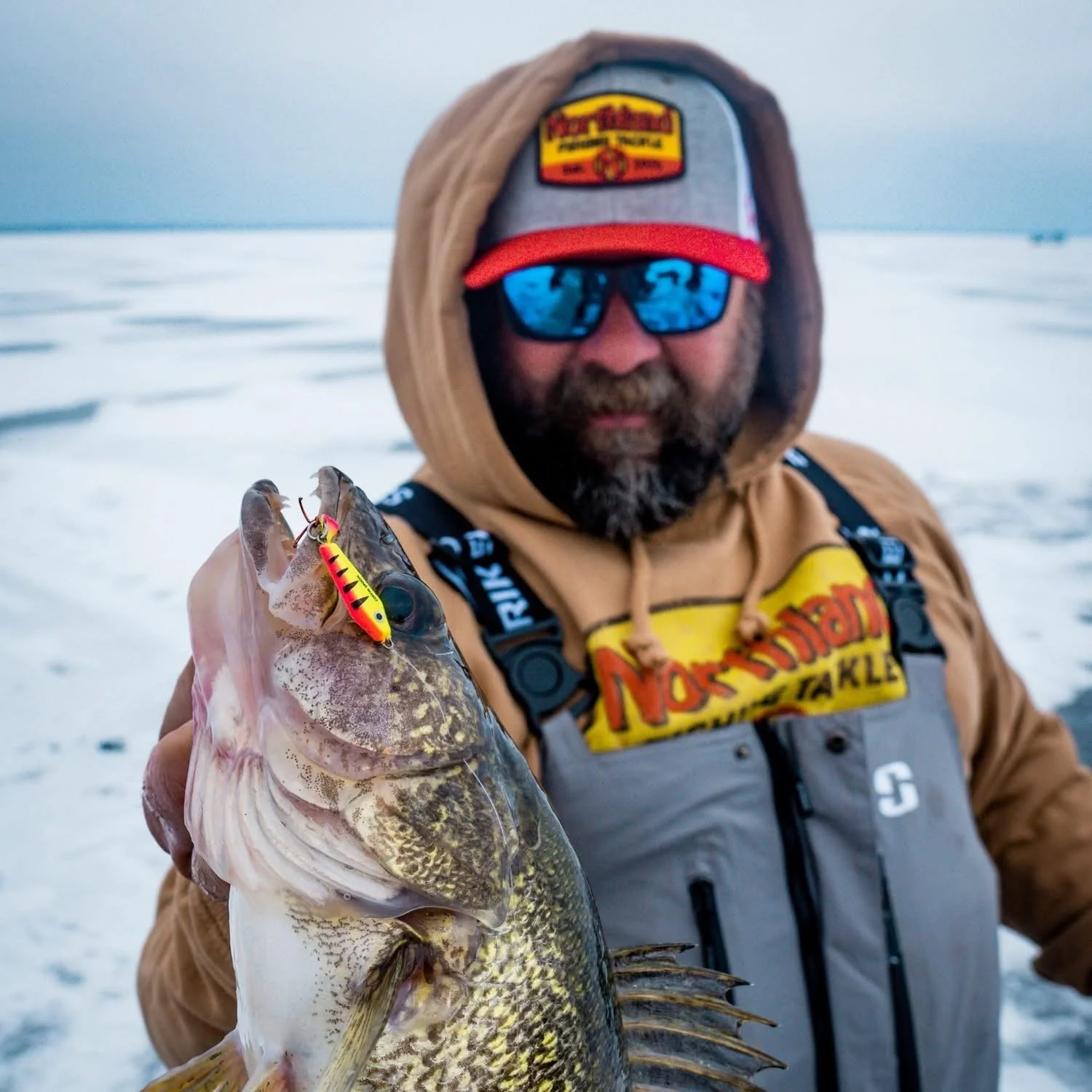
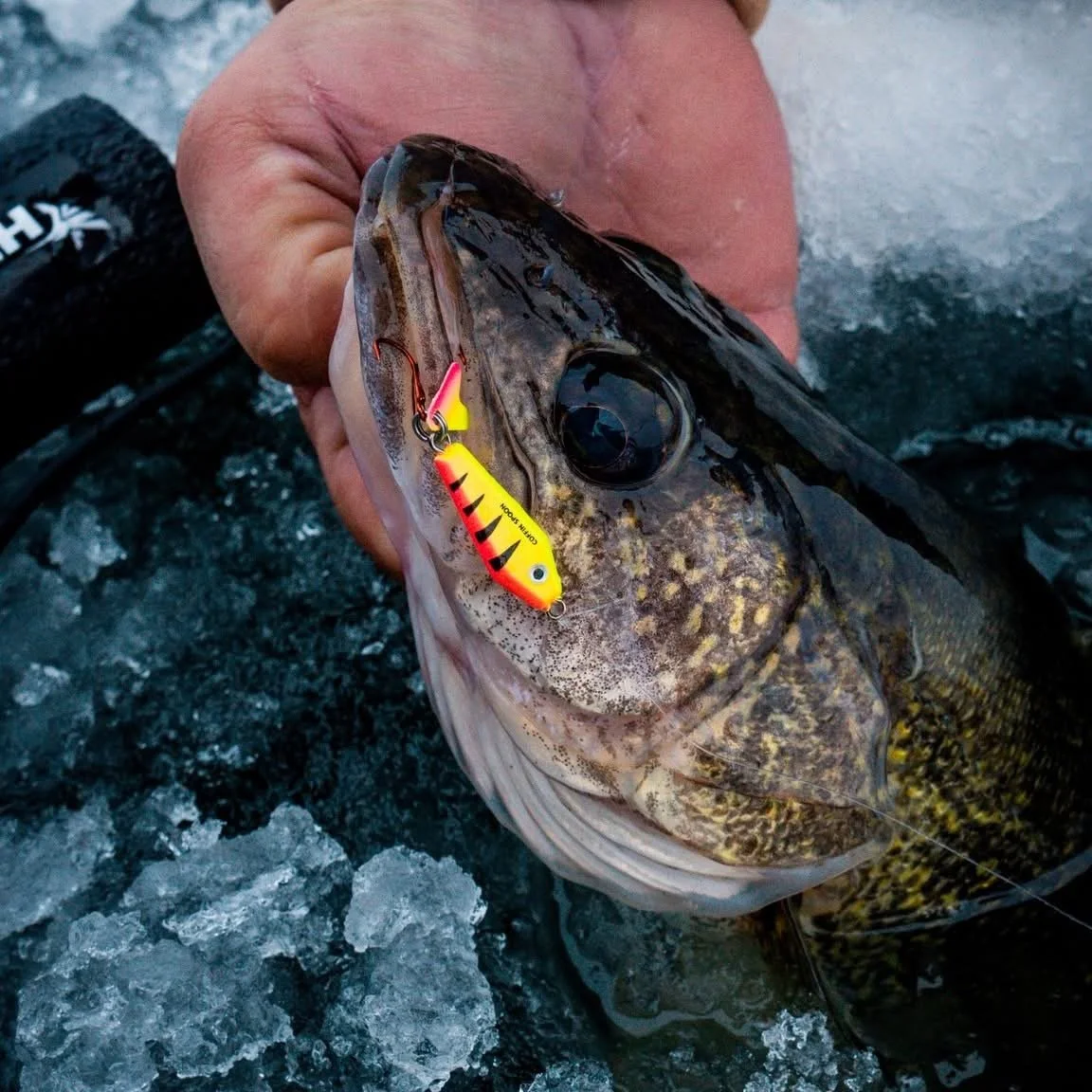
Above: The Northland Buck Shot Coffin Spoon has a body that is angled with beveled edges, allowing it to flash and reflect light in multiple directions to attract fish from a distance. Fitted with an internal brass rattle and kicker-tail fin, this is an option that calls in fish from a distance. (Photos Courtesy of Northland Fishing Tackle)
When selecting sound-producing materials, tungsten is the premier choice for volume and frequency. Due to its extreme density, it produces a sharp, high-pitched 'ping'—much like a whistle—that is exceptionally loud and carries over long distances. Stainless steel is similarly loud, offering a crisp, metallic strike. For a mid-range acoustic profile, glass or composite rattles create a sharp 'click' or 'tink.' While high in frequency, these sounds are slightly more localized, similar to a shout. Brass provides a deeper, moderate-frequency 'thud' or 'clack'; though it mimics a hand clap in tone, its lower frequency often allows the sound to resonate further through dense media. Finally, hard plastic produces the most subtle acoustic signature, resulting in a muffled, low-energy sound.
On rattle chambers, think of it like listening to different kinds of drums that are inside the same room as you vs being played inside a closet. Ice fishing spoons either have internal rattles (Lindy Rattlin Flyer, Northland Coffin Spoon, etc.) or exposed chambers (Northland Buckshot series, VMC Rattlin Roach Spoon, etc.) Chamber size and material play into sound dynamics.
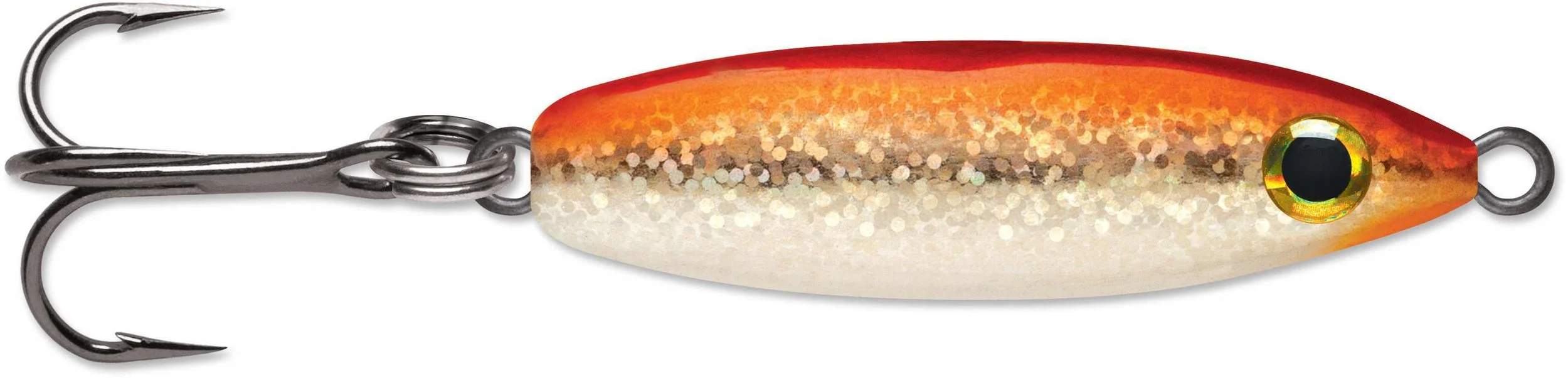
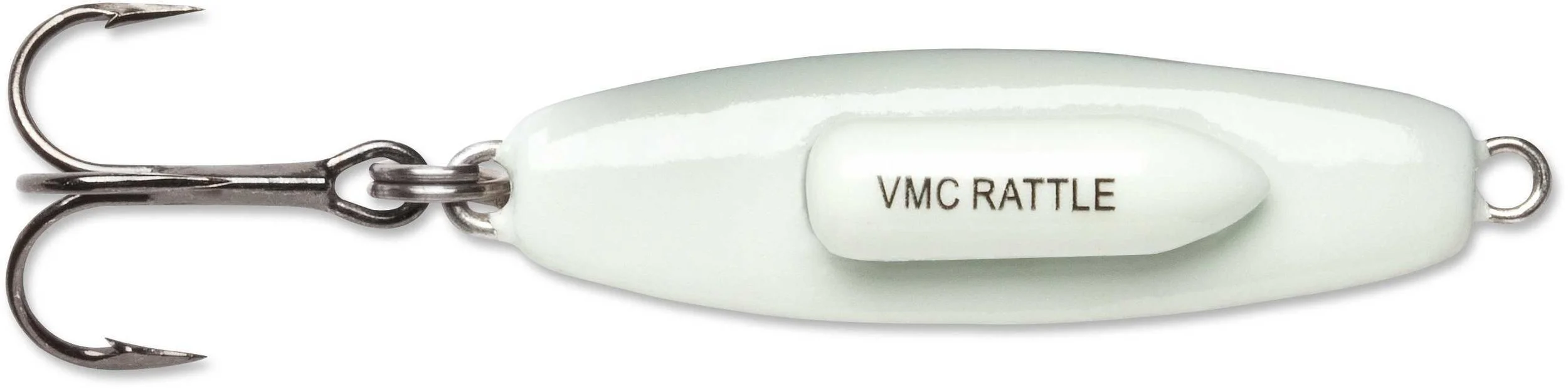
Above: The VMC Rattle Spoon is a popular choice. One side is painted while the other (pictured right) has an exposed rattle chamber. (Photos Courtesy of Rapala VMC)
Material of the spoon itself is an additional consideration. Whether the body is lead, alloy, or tungsten, they all vibrate and move differently than one another. When a spoon is jigged, the rattle will create a sound that aids to the vibration and action of the bait. Jigging spoons appear simple but they have a multi-sensory profile.
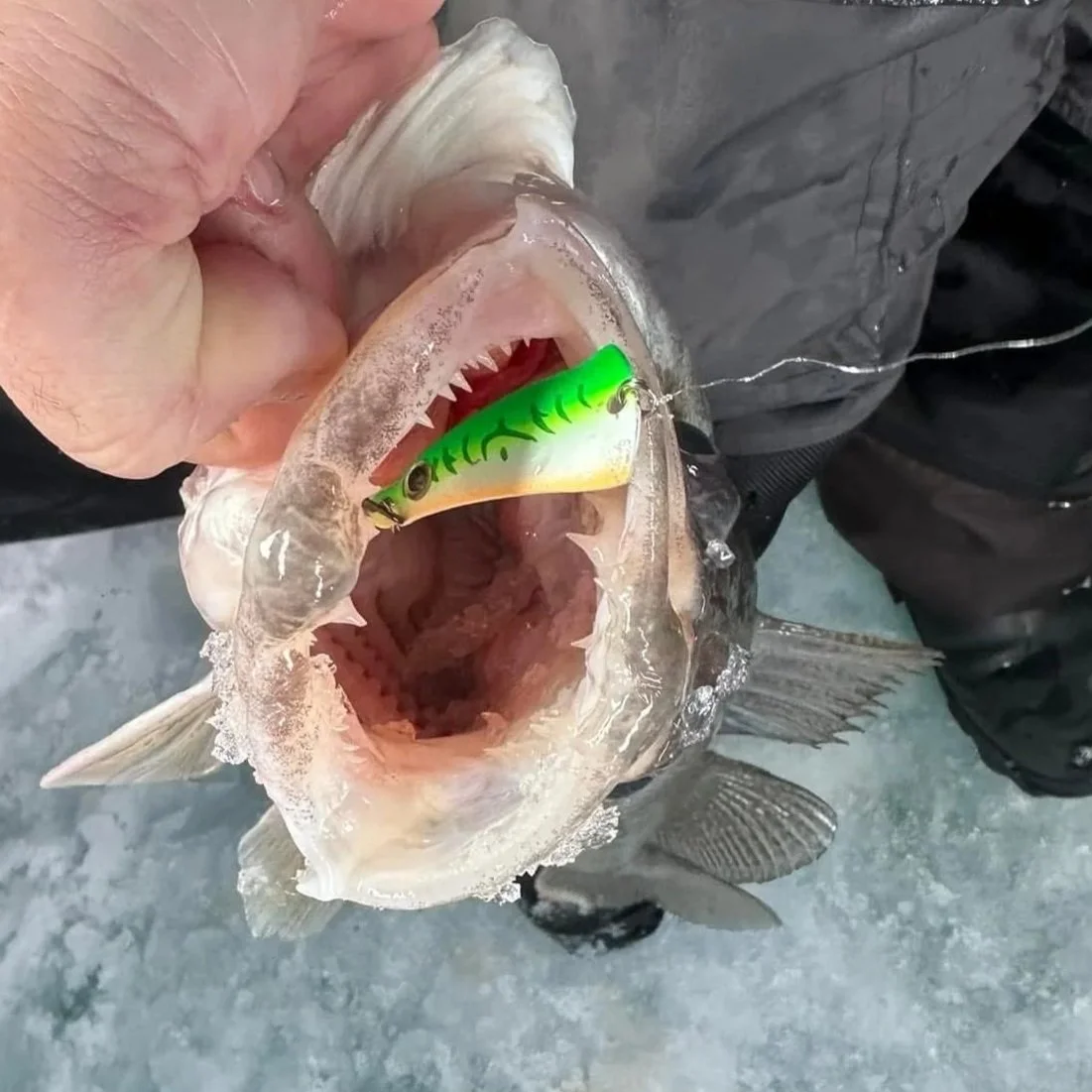
Down the hatch! (Photo Courtesy of Capt. Brandon Stanton- Team Gunsmoke Sport fishing)
Silent spoons do something better than their noise-making counterparts. The action potential is made up with vibration in lieu of sound. When sound can be too much during this time of year, the flutter and tumble action of a spoon or lack thereof creates enticement. Glowing display, shivering action, or tumble of action. The silent Lindy Quiver, Northland Glow Shot and Thumper. VMC Tingler and Tumbler. Even though they do not make sound, the vibration is detected.
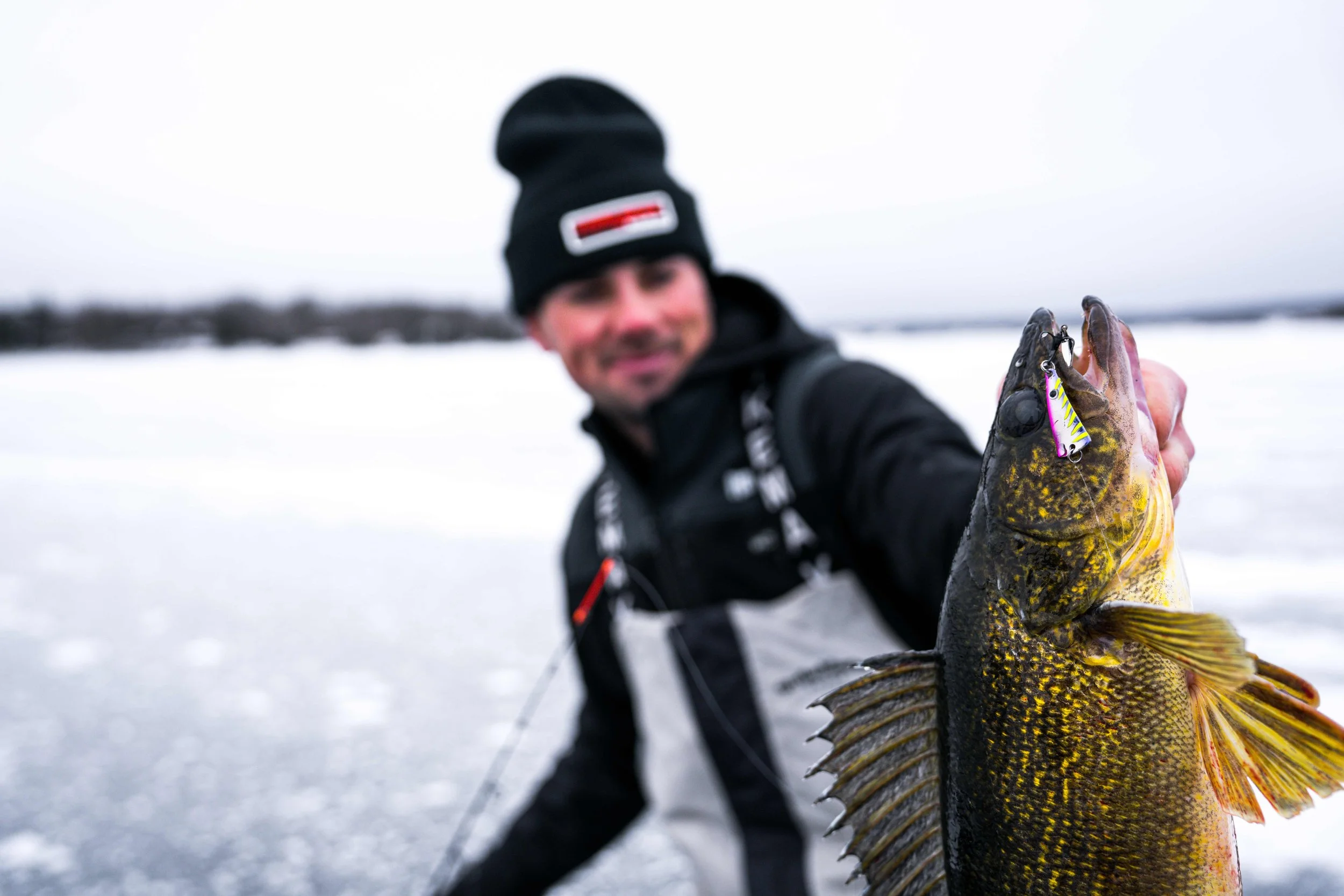
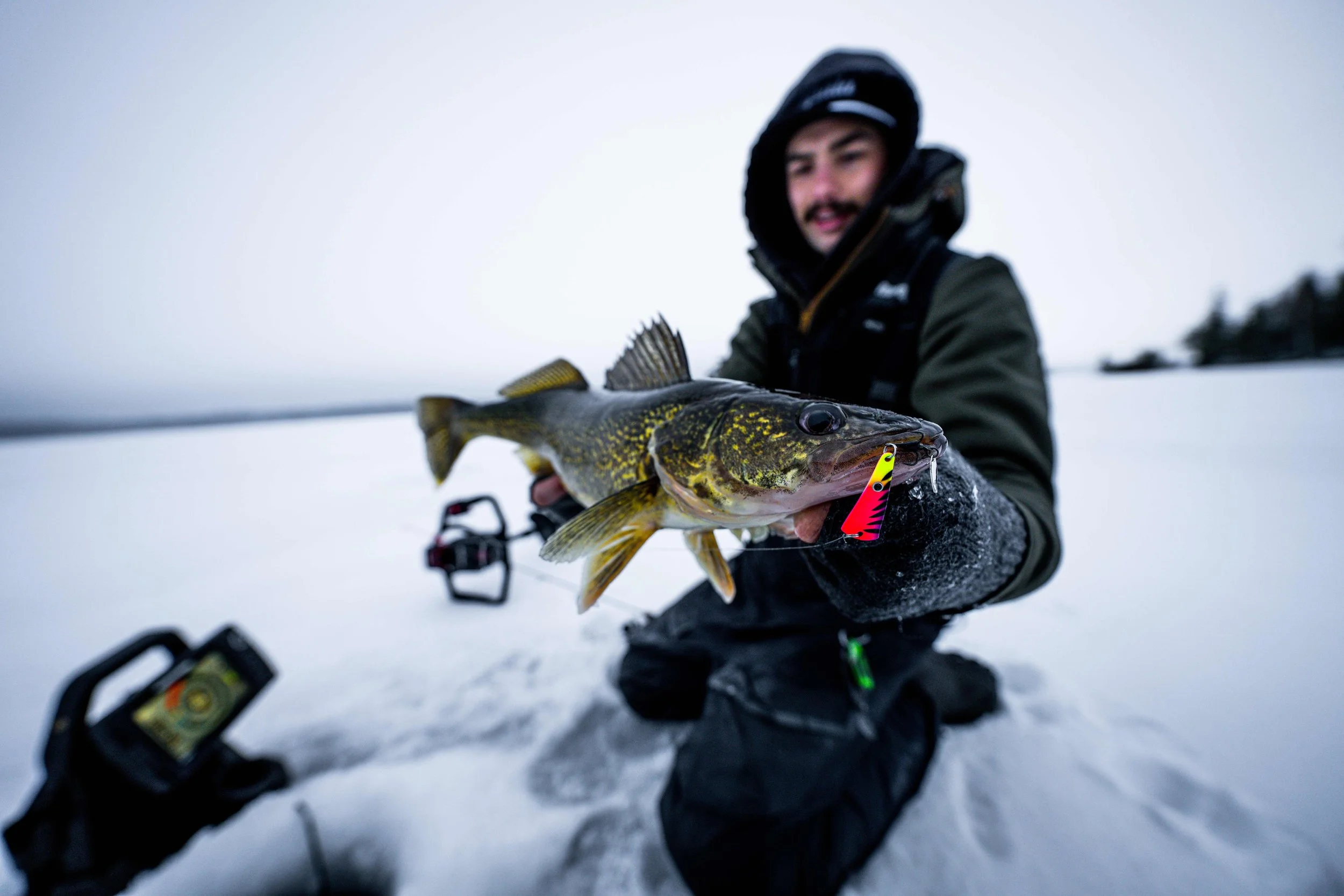
Above: The VMC Tingler has an action that fish find hard to beat! (Photos Courtesy of Rapala VMC)
So what does all of this really get at? Towards the end of winter, gamefish have seen a fair share of baits. This is at a time where oxygen levels are at their lowest and these fish are sluggish. Not only are they skeptical about biting, they do not have the energy needed to consume calories. Sound can be a wonderful thing to have in the tackle arsenal, this is a time of year where it becomes overkill. Sound does a great job at calling in fish from a distance, but it may be too much for them to be convinced of a bite. Fish are curious. They want to investigate, but that does not mean they will bite.
Not all sounds and motion is the same, especially during this time of year.
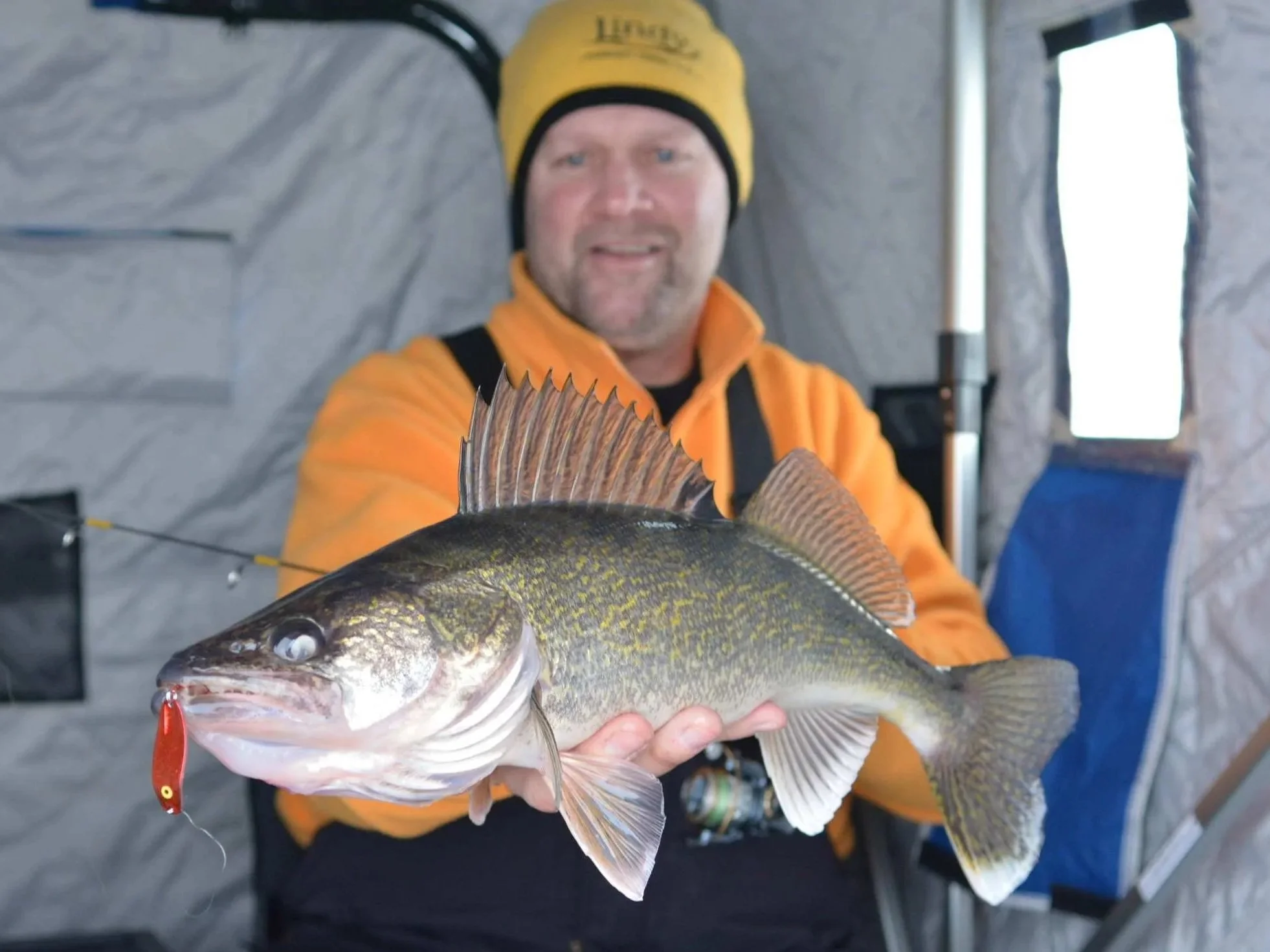
The Lindy Quiver Spoon, available in silent and rattling, is made up of a lightweight metal to create a slow, tantalizing action. (Photo Courtesy of Lindy Fishing Tackle)
Calling in fish gets half of the job done. To seal the deal, options that are subtle in presentation like a dead stick, silent tumble spoon or a regular jig head. Using ice fishing sonar, anglers are able to see how fish respond in real time. This is where having an operation with two rods in use is best. While one may call them in, the other gets bit as a neutral bystander.
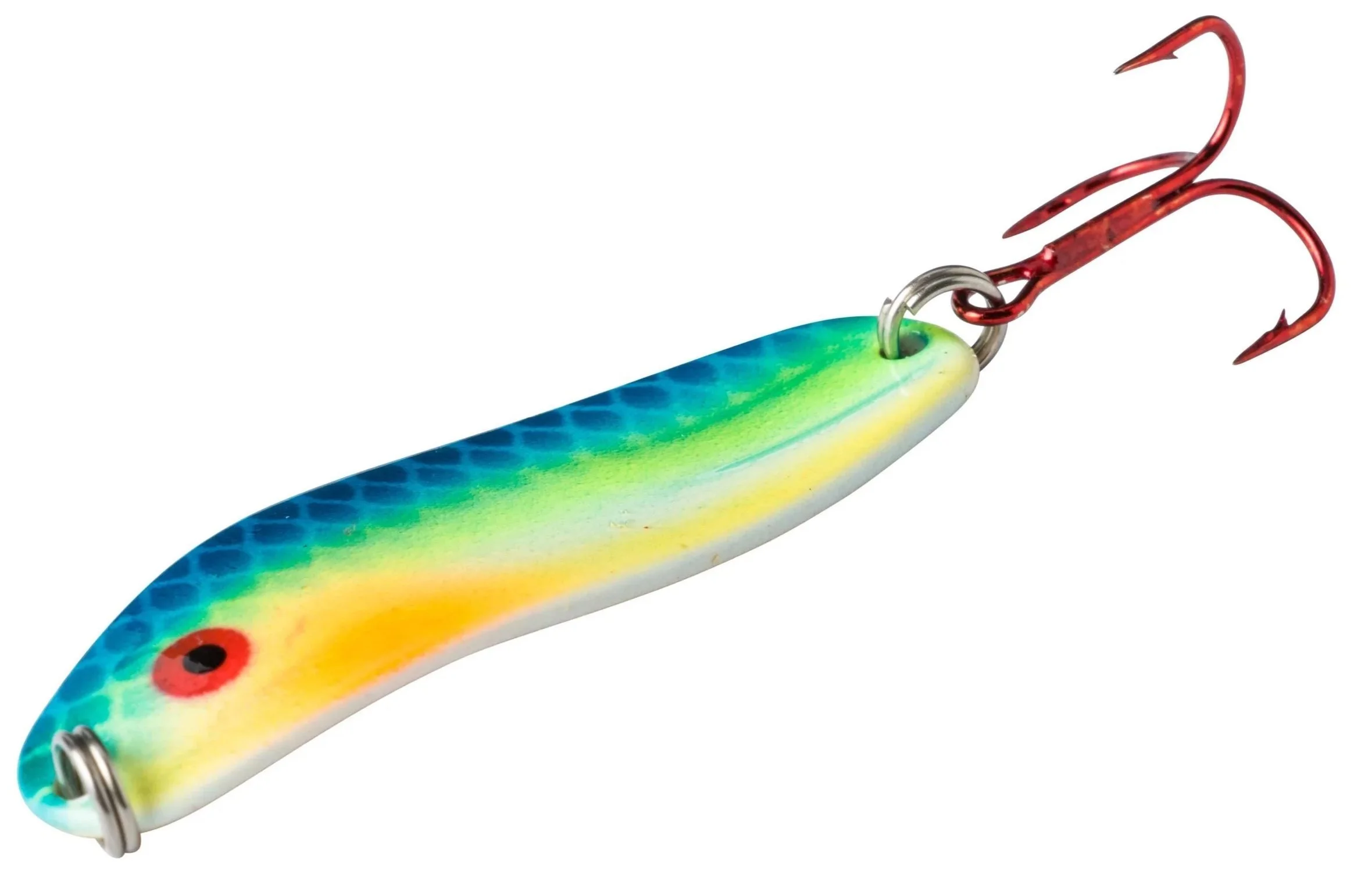
Lindy Quiver Spoon (Photo Courtesy of Lindy Fishing Tackle)
Not every fish is going to bite. The activity can change by the hour. This is why it is good to have options. Spoons aren’t a ‘one and done’ bait. Successful anglers need variability. Not all spoons sound or swim the same. There will be days where they only seem to bite glow in the dark or they were scared off by loud tungsten clacking.
Your bait must offer a reason to be eaten, especially when they are weary. During this time of year, perch and walleye can take their time and feed off of blood worms and invertebrates on the bottom that is more suitable for their mood. The good thing about ice fishing spoons is that they offer absolute versatility.
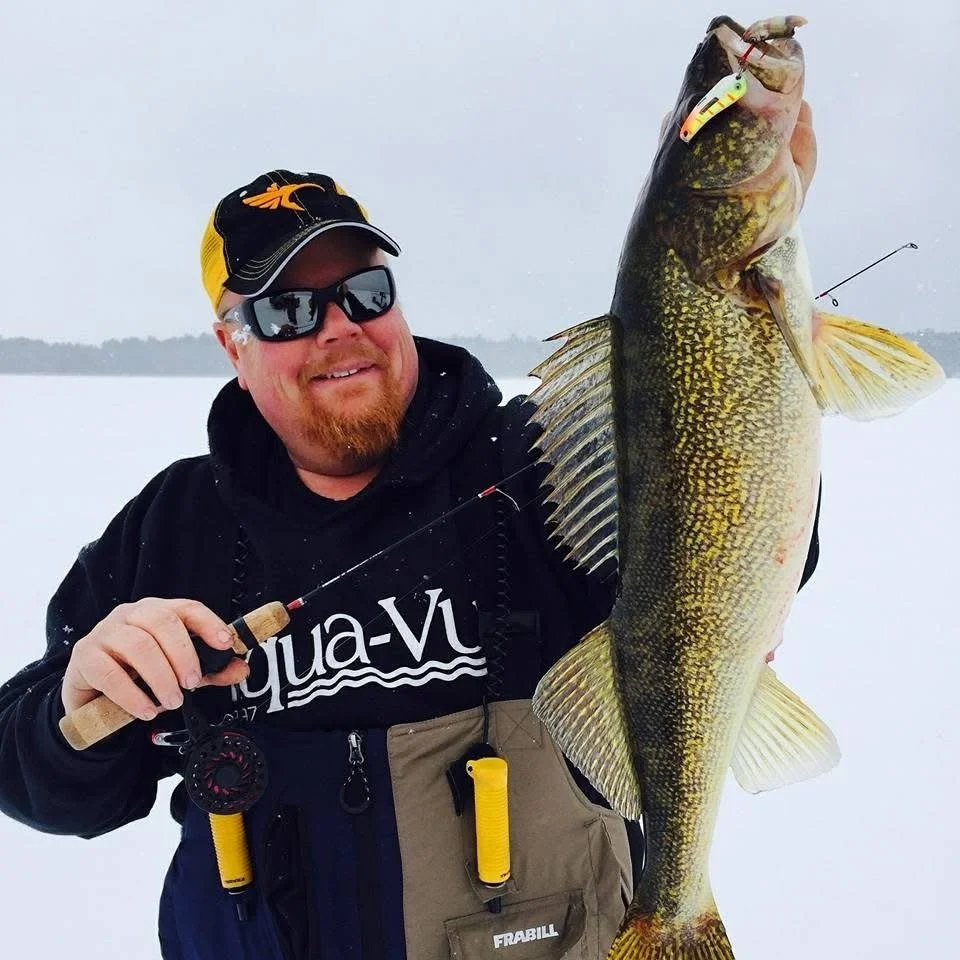
Above: Brian ‘Bro’ Brosdahl showing off a dandy walleye caught on a Northland Glow Shot Spoon. Bro is a big advocate of dressing treble hooks on ice Fishing baits. (Photo Courtesy of Bro)
Sometimes an offering of a meal needs a special topping, or in this case- a tipping! In the same way ice cream looks better when it is dressed in chocolate sauce and fixins, dressing a hook on a spoon serves the same purpose. Blood worms, waxies, minnow heads, chicken skin, there are a lot of options to decorate and hide a hook to help entice a hesitant fish to commit.
Over the recent years, ice fishing tackle has seen more baits come with hooks that are dressed in feathers or have a piece of UV/glow resin on the hook shank. These options offer flash and color appeal. Feather or marabou material additionally helps slow down the fall and assist in a tumble action of options like the VMC hatchet spoon.
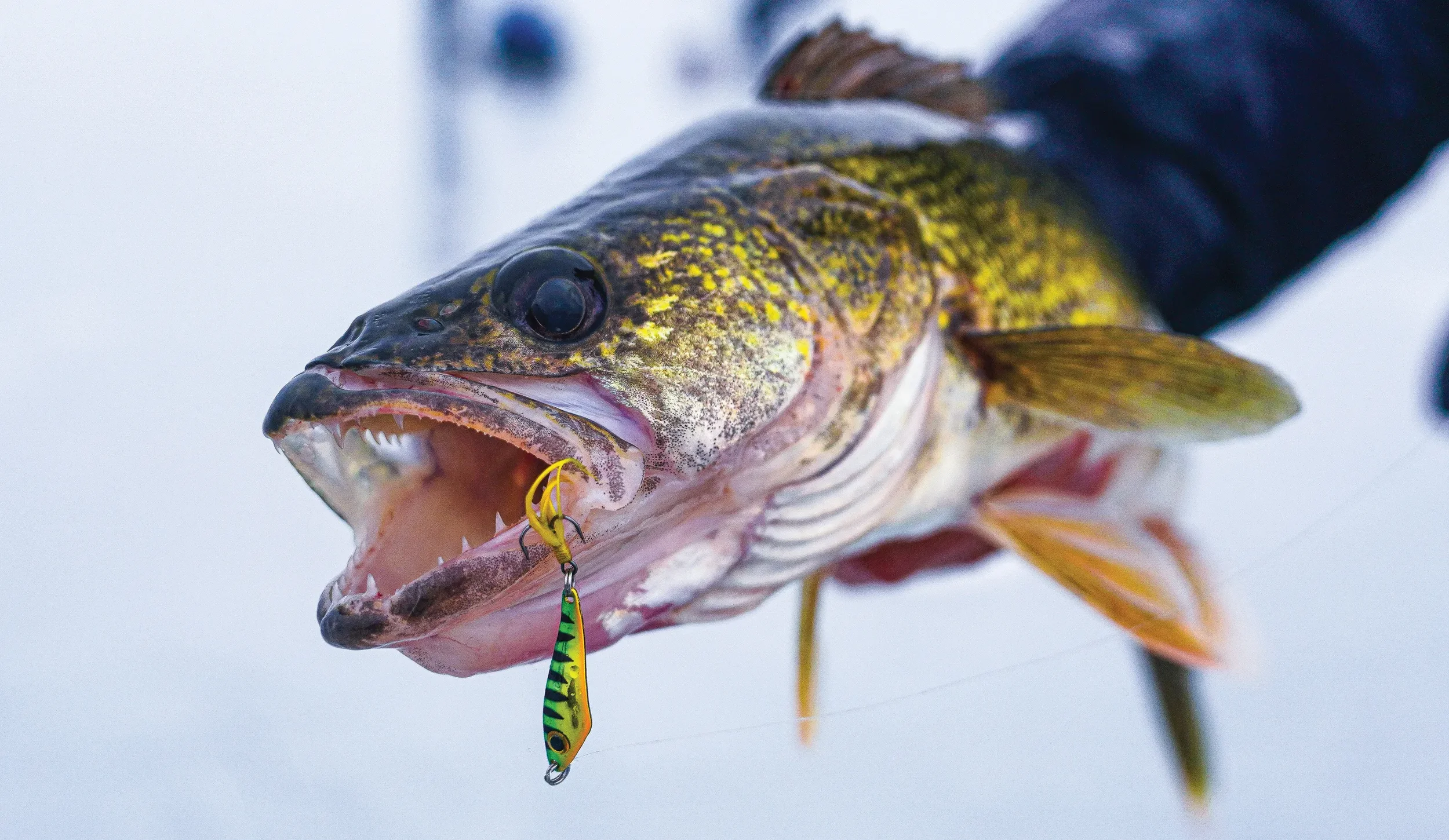
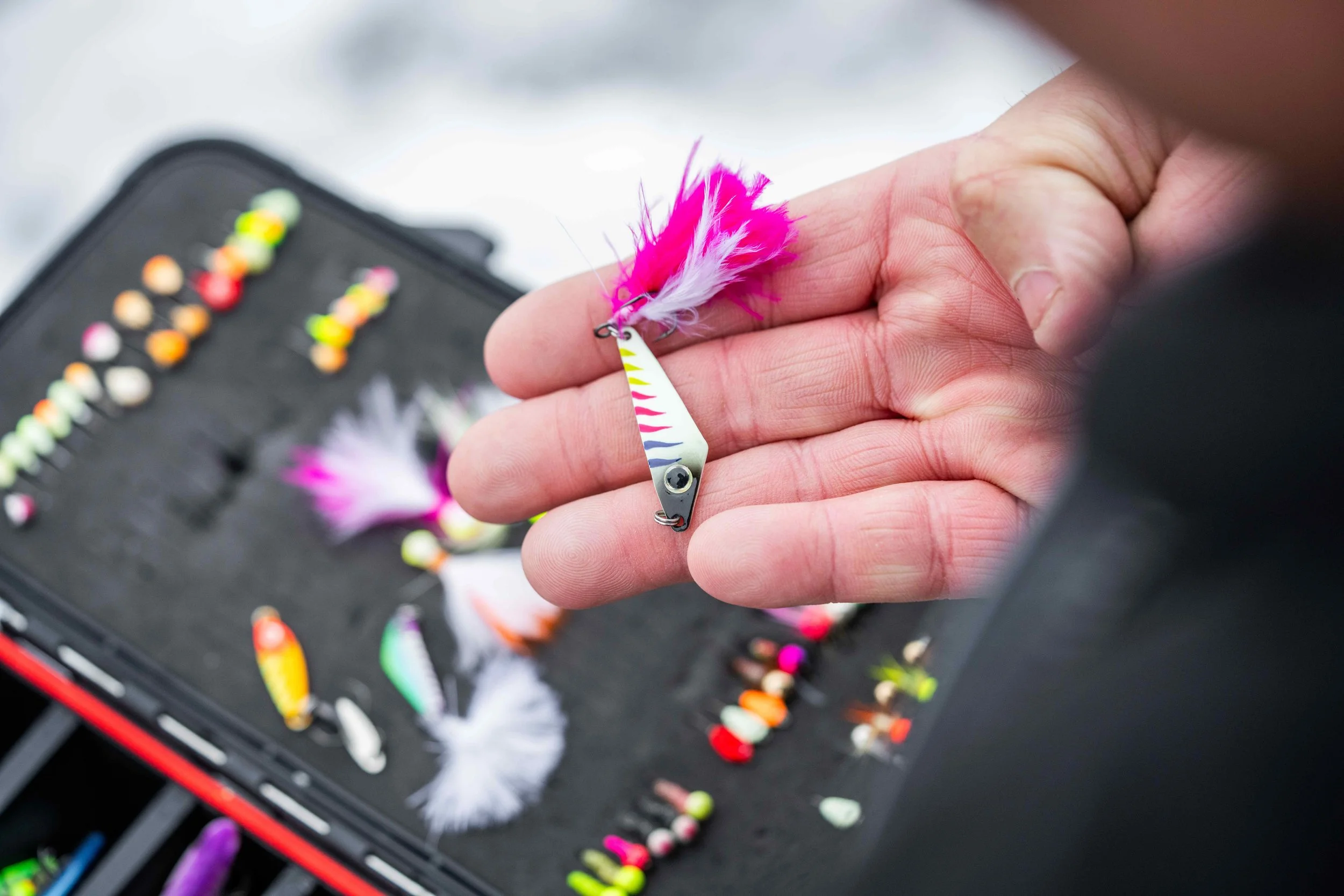

Above: From the unique flutter on the drop to the marabou pulse at rest, the VMC Hatchet Spoon is a trusty tool when it comes to triggering big bites. (Photos Courtesy of Rapala VMC)
This time of year is the beginning of a seasonal transition for humans and fish. While we see the end of winter on the horizon, fish are taking note and beginning to think about spawning. Depending on where an angler finds themself, ice thickness can easily vary from 12”+ to fading fast. Always use caution and take safety measures when ice fishing, especially during this time of year.
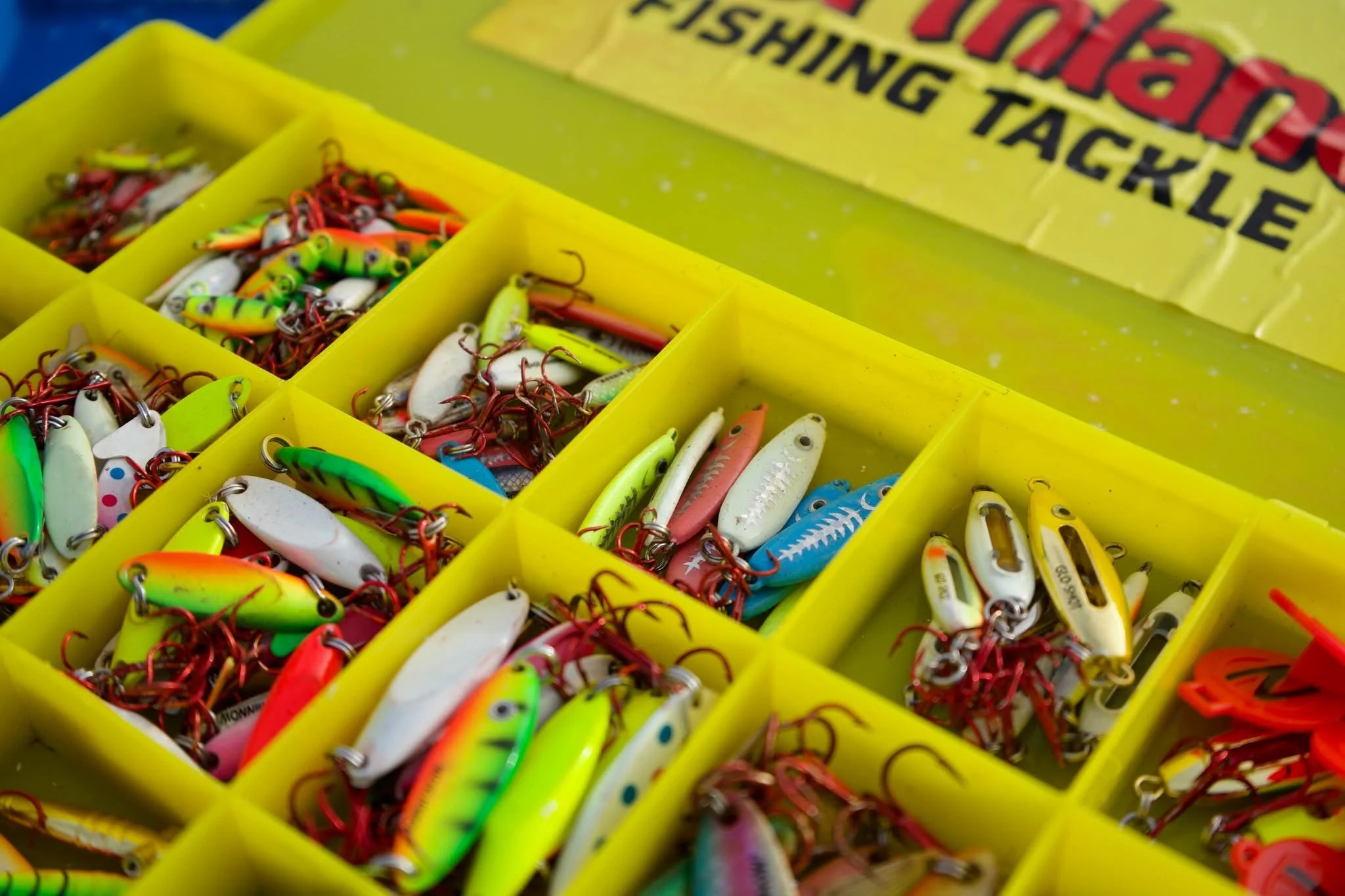
There are a lot of great options for spoons on the market! (Photo Courtesy of Northland Tackle)