

Border River Blueprint: Tactics, Tips, and Technical Insights for Detroit & St. Clair River Walleye
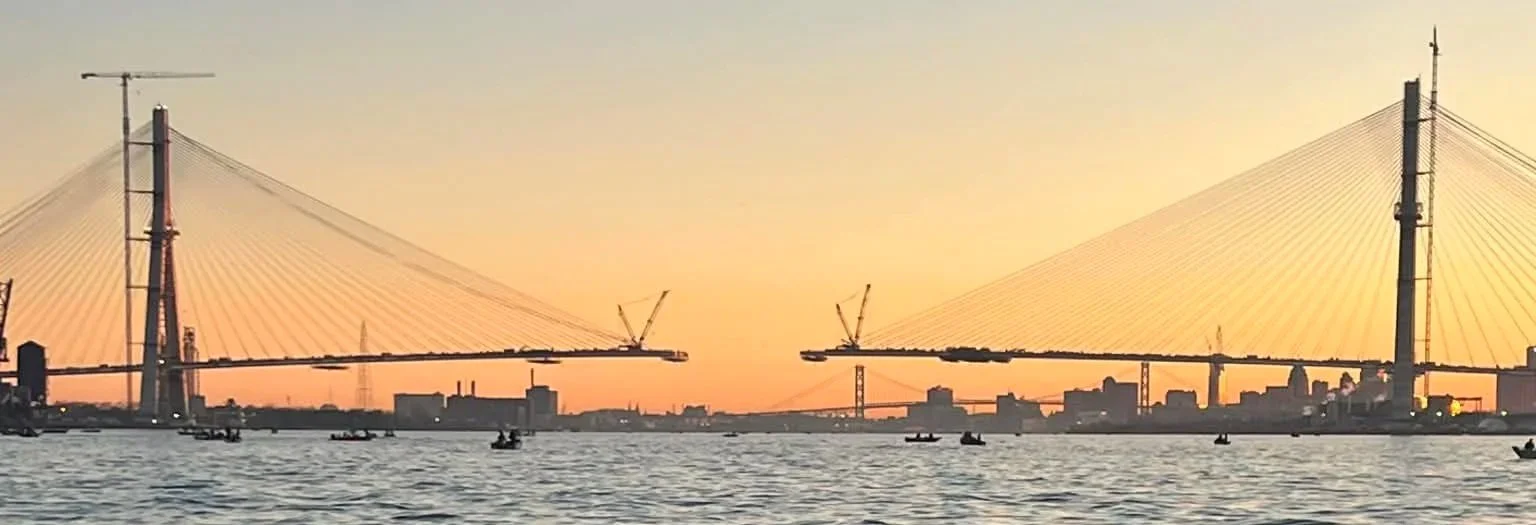
Things are coming together- for the new bridge AND the springtime walleye extravaganza! (Photo courtesy of Nick Barnes, 2024)
April in the D was a tagline for Fox Sports Detroit, highlighting the excitement of the season to be a sports fan in the Motor City. Tigers baseball is underway, the Pistons find themselves at the top of the Eastern conference, and the Red Wings are enjoying their vacations in Cancun (BTW- it is time to scrap the Yzerplan). There is so much excitement nowadays- what more can a guy ask for? Well, how about millions of walleyes in one of the greatest freshwater fish migrations in the world?
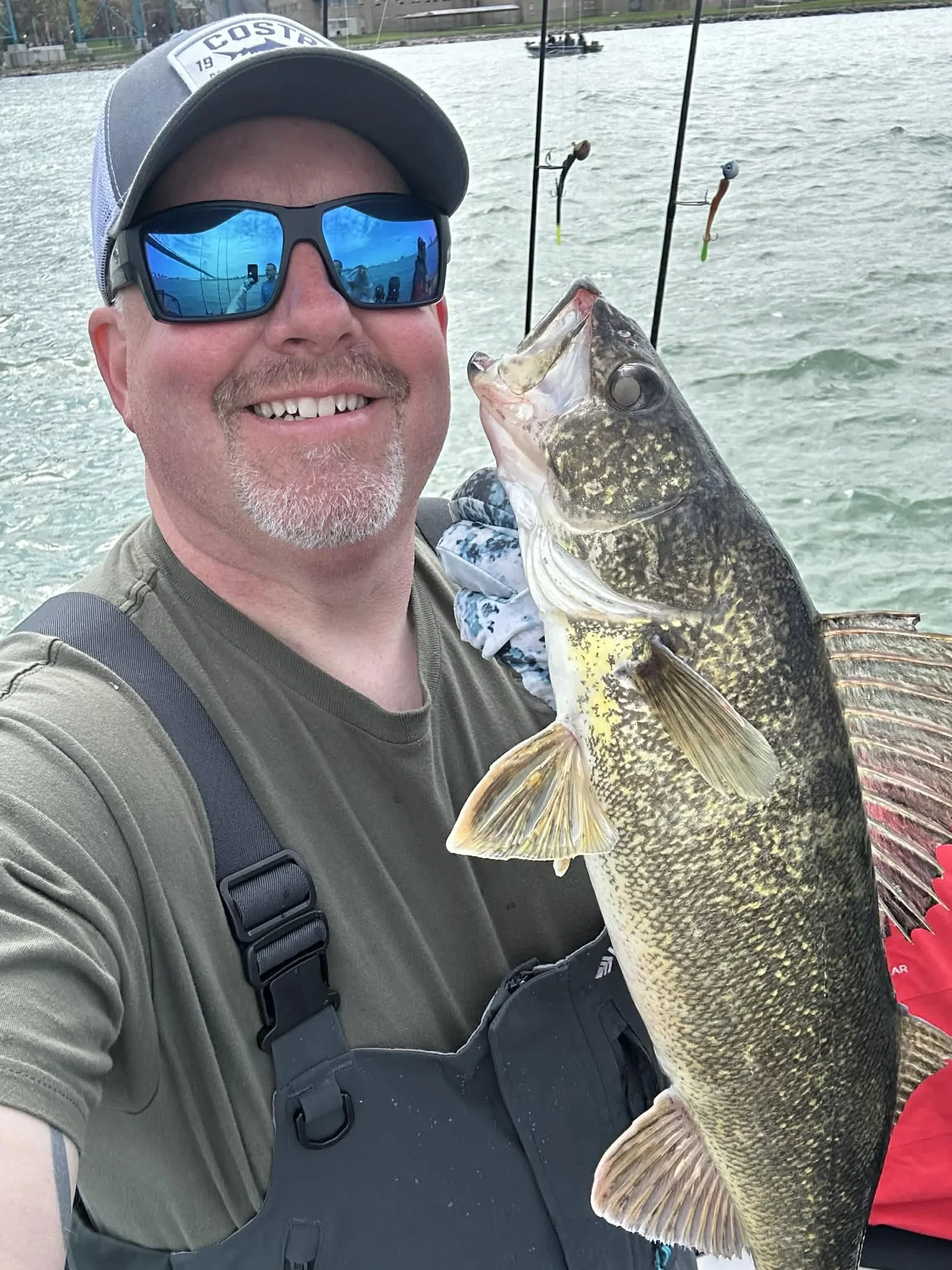
The Detroit River is a walleye fishing powerhouse, especially in the spring. Roughly 100,000 fish alone will be harvested in the prime nine weeks of the migration. Millions of walleye will enter the 32-mile waterway for spawning. While most are estimated to come from Lake Erie, some fish that reside in Lake St Clair will also enter the river. This is on top of the Detroit River having its own resident walleye population. At times, there are so many fish that electronics can struggle to distinguish individual signals, as the massive schools of walleye create a solid carpet of life that blurs the distinction between the riverbed and the fish themselves.
What kind of things make an angler more successful in this mass walleye parade? While the sheer volume of fish in the system is staggering and people often cite quick or E-Z limits, there are some elements to consider. Having a trick up the sleeve and furthering understanding will equip anglers through the season for better results.
Jigging Cadence: Mix Things Up!
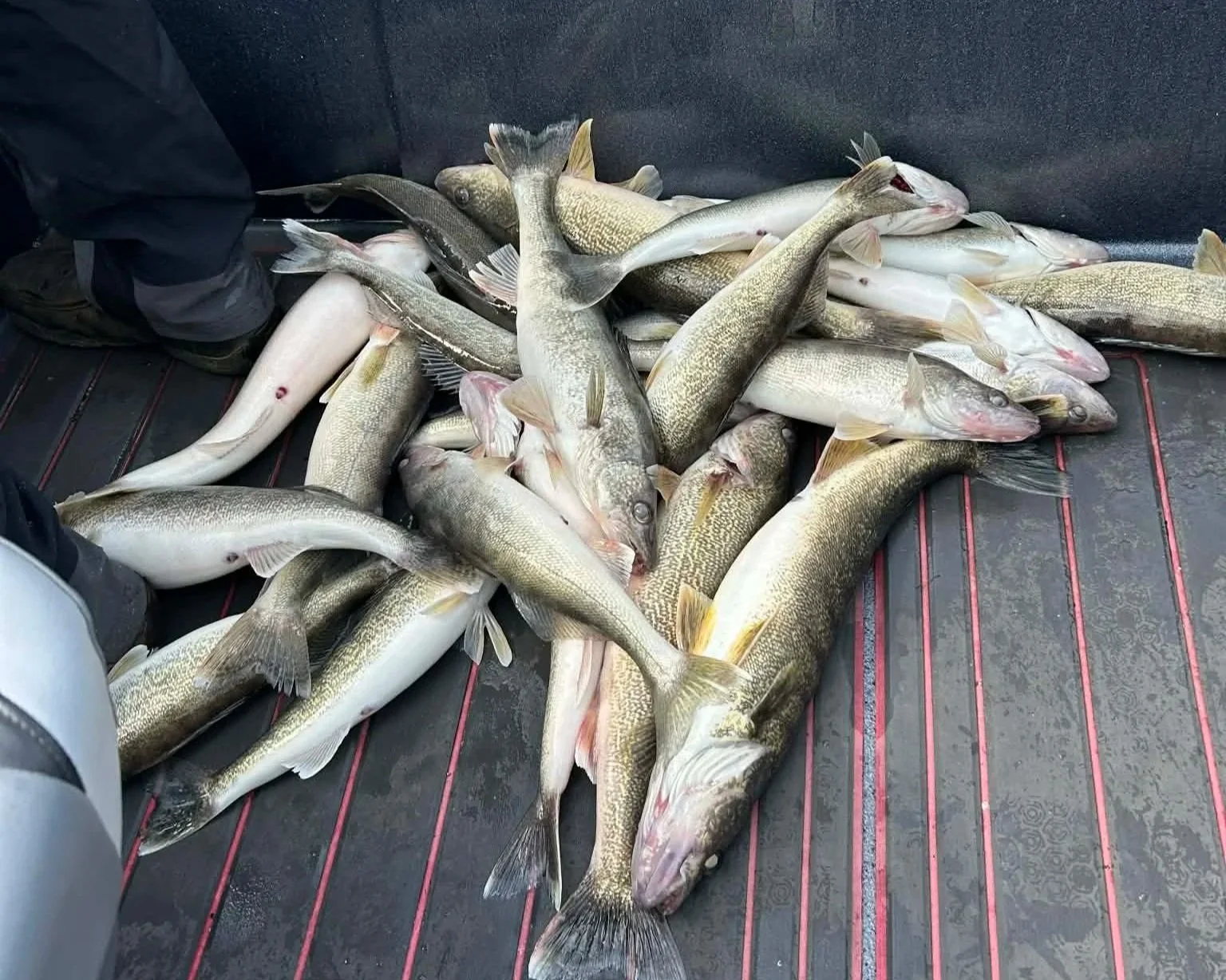
In colder water, it pays to keep the action low and slow- No snap jigging. Sometimes holding the jig for a couple seconds on your upward action, can trigger slow or reluctant walleyes into striking. When vertical jigging, you never want to drag your jig, but letting it sit on the bottom and holding it in place for an extra half second can make a difference in triggering fish to inhale it. Once the water temperature increases, so can the speed and cadence of the jig, along with the lift it up off the bottom a few more inches.
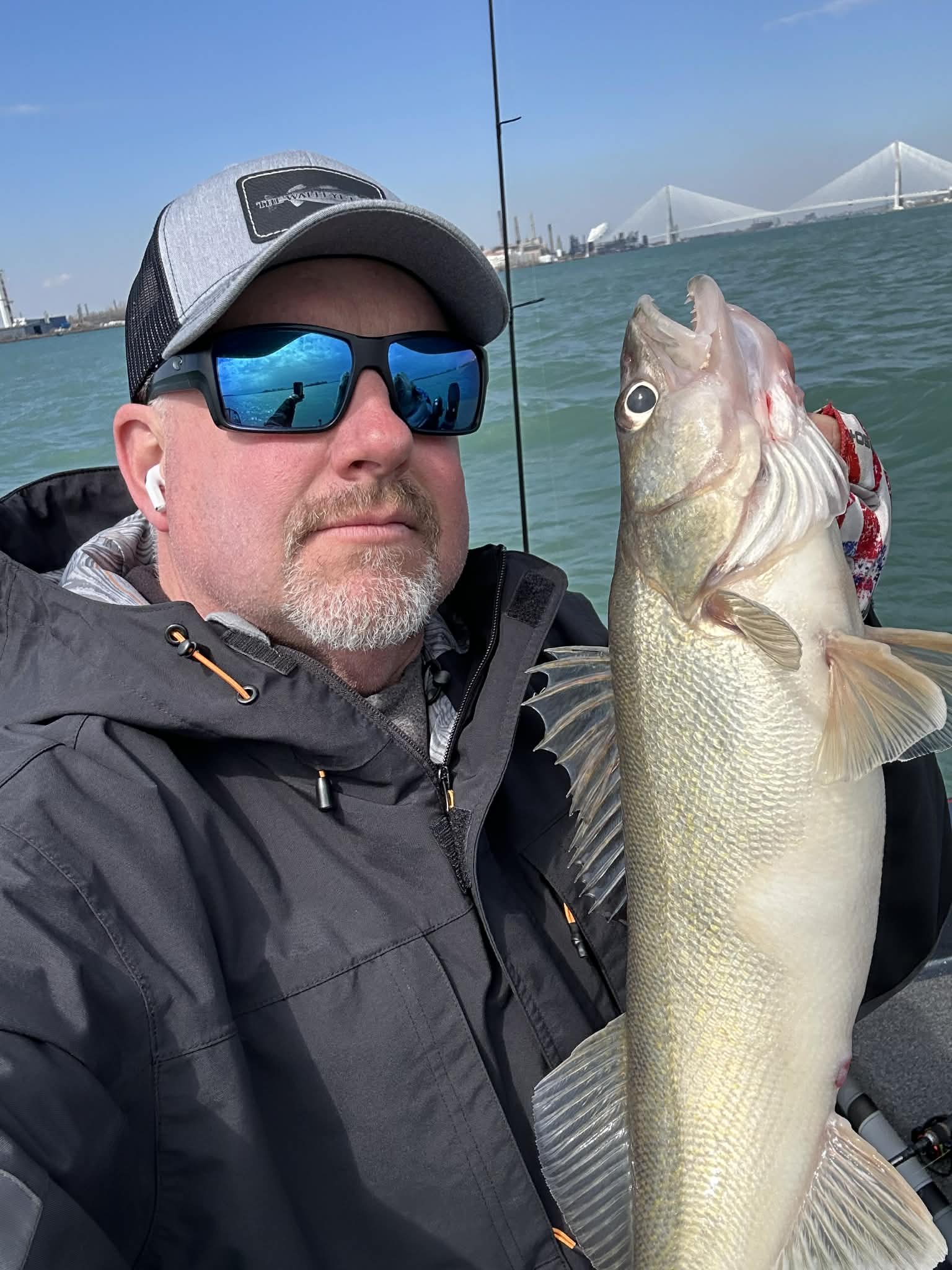
“Think of your jig cadence like you are dribbling a basketball. Feel free to switch it up and see how the fish respond!”- Chris Carroll
Experiment and feel free to add in “double dribble”, meaning in the up stroke, pump it twice to allow an extra movement before going back to to the bottom. Think of it like this: treat the cadence and action of the jig along the bottom is like bouncing a basketball- see how these fish play and respond. They may want it low and slow or consistent with short pauses.
Mechanics & Confidence: Understanding your rig, equipment, and Yourself.
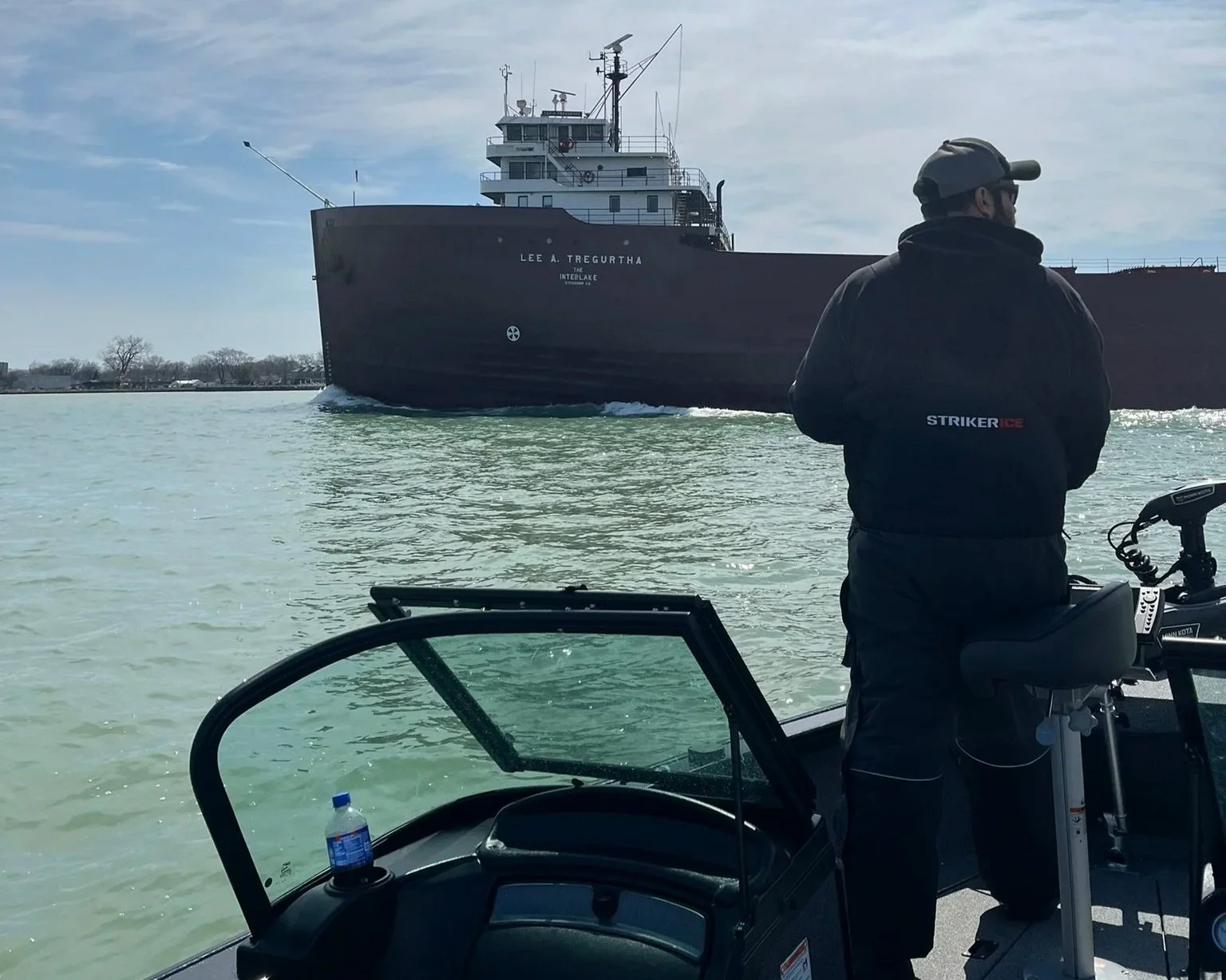
A good captain always has safety in mind! This requires being aware, knowing how the boat operates, and having confidence to read situations.
Walleye enthusiast, Nick Barnes, shares his insight on the importance of boat control and confidence. Both things that he believes are crucial for improved results.
Staying vertical is the absolute baseline for success (more on that in the following section). If you aren't actively chasing your line to keep it pinned directly under the boat, you are essentially fishing blind and sacrificing your presentation. In order to do this, boat control is crucially important. Every time you are on the water, learn your rig and how you operate best. Some people prefer a foot pedal vs a remote control. With time and practice, anglers will learn different the flow of difference sections of the river, what speed setting works best, and how to the boat operates. With experience, you will learn and build confidence. Before you know it, you will be able to see the water and be able to tell what setting is going to work just by looking at it.
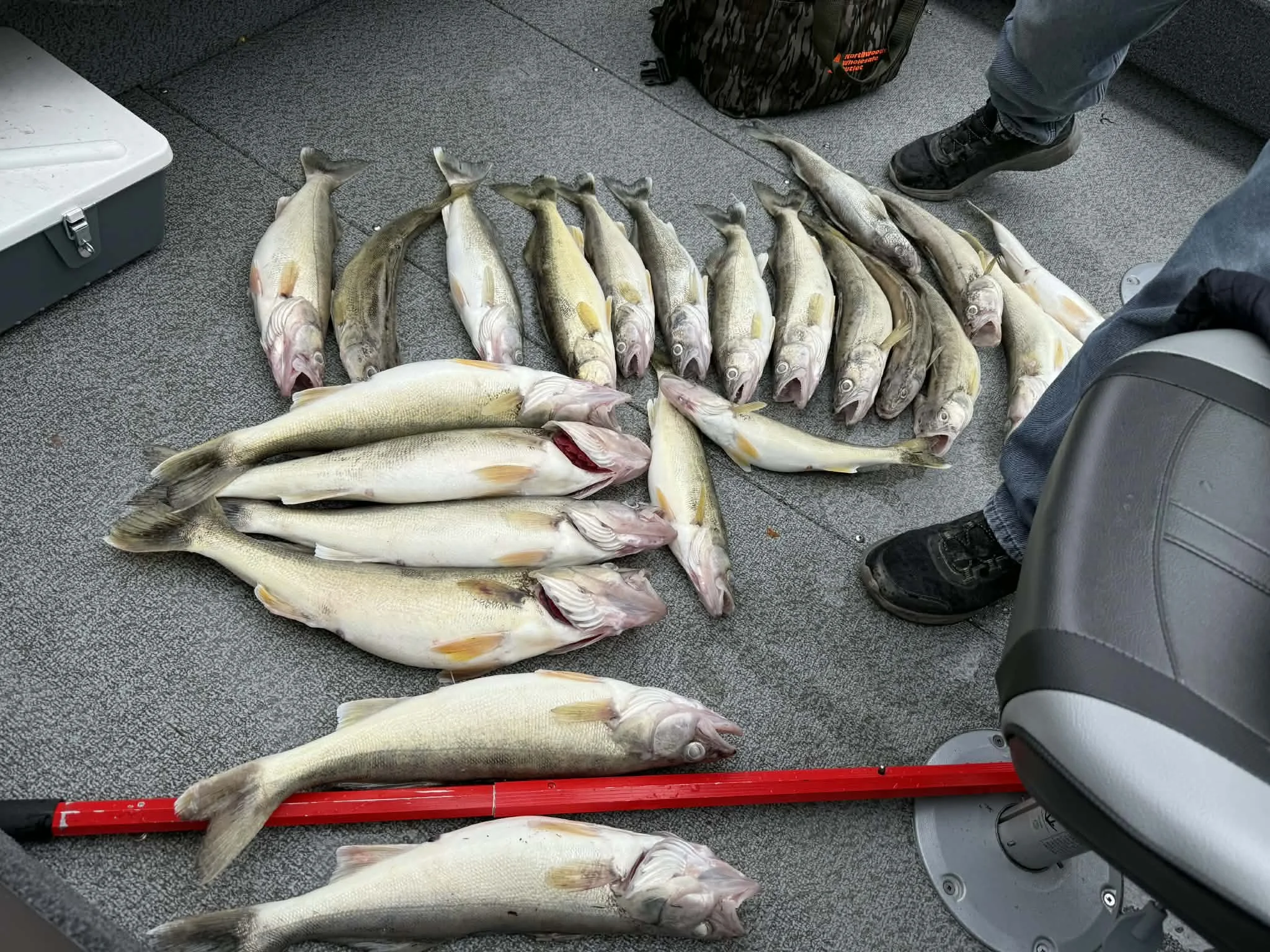
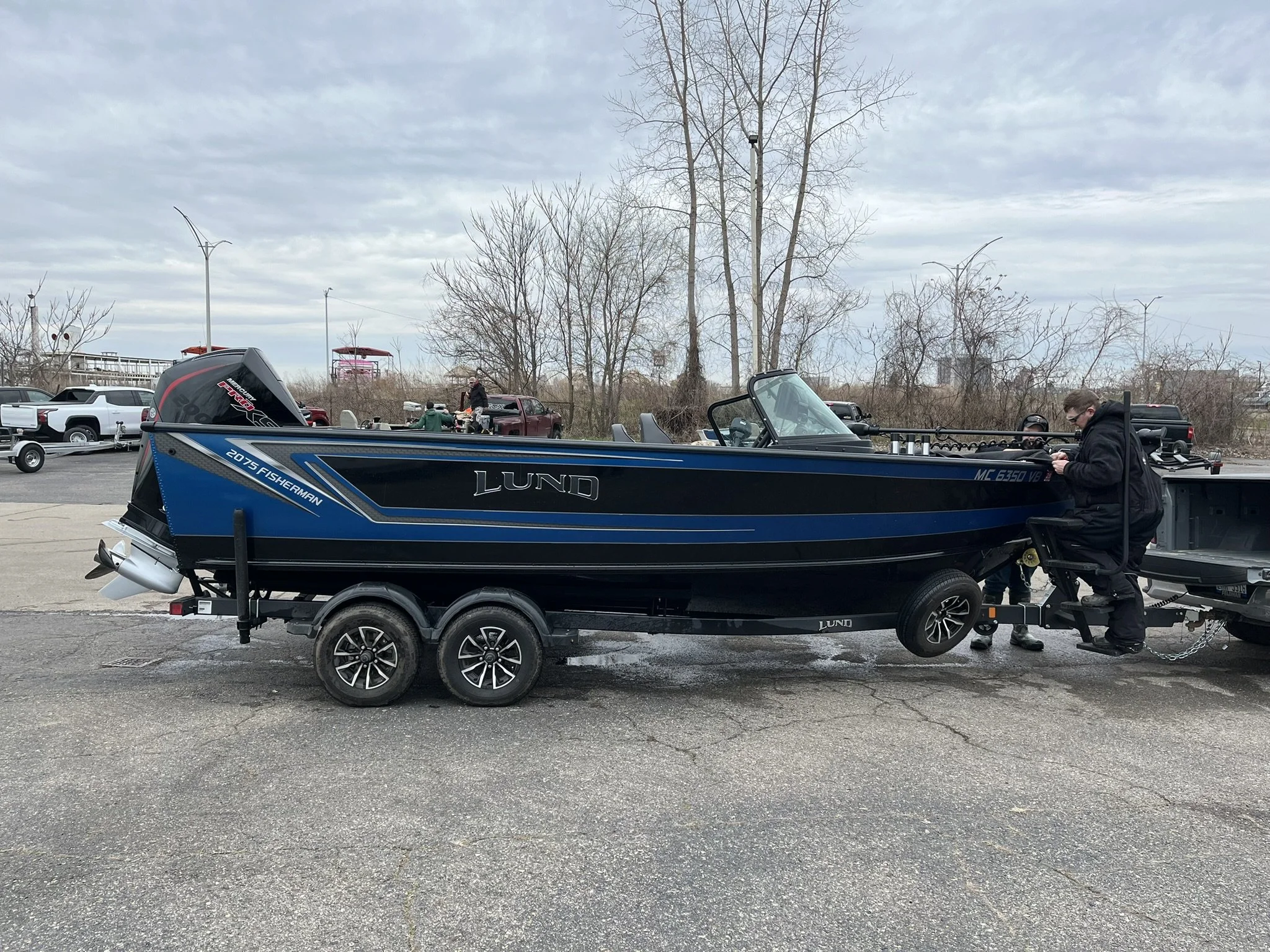
Remember- “A smooth sea never made a skilled sailor.” Go out there, practice, pay attention, and stay safe.
Having the right equipment can make the difference between catching a few fish here and there compared to a consistent bag. When vertical jigging, a good rod paired with no-stretch braid or “super line” will be sensitive enough required to feel the bottom or the detect the lightest strike. Without that direct connection, anglers will be missing fish they never felt to begin with.
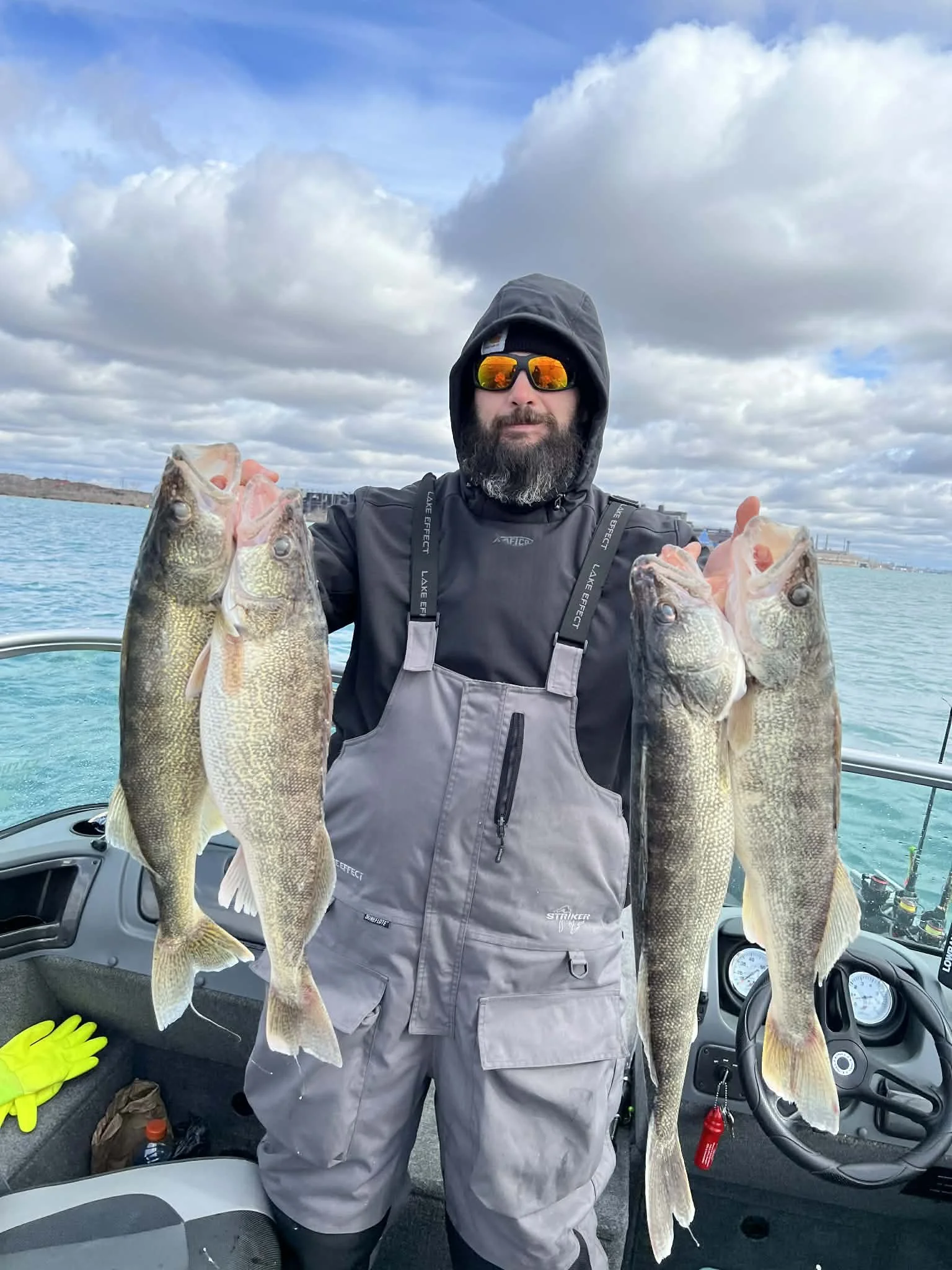
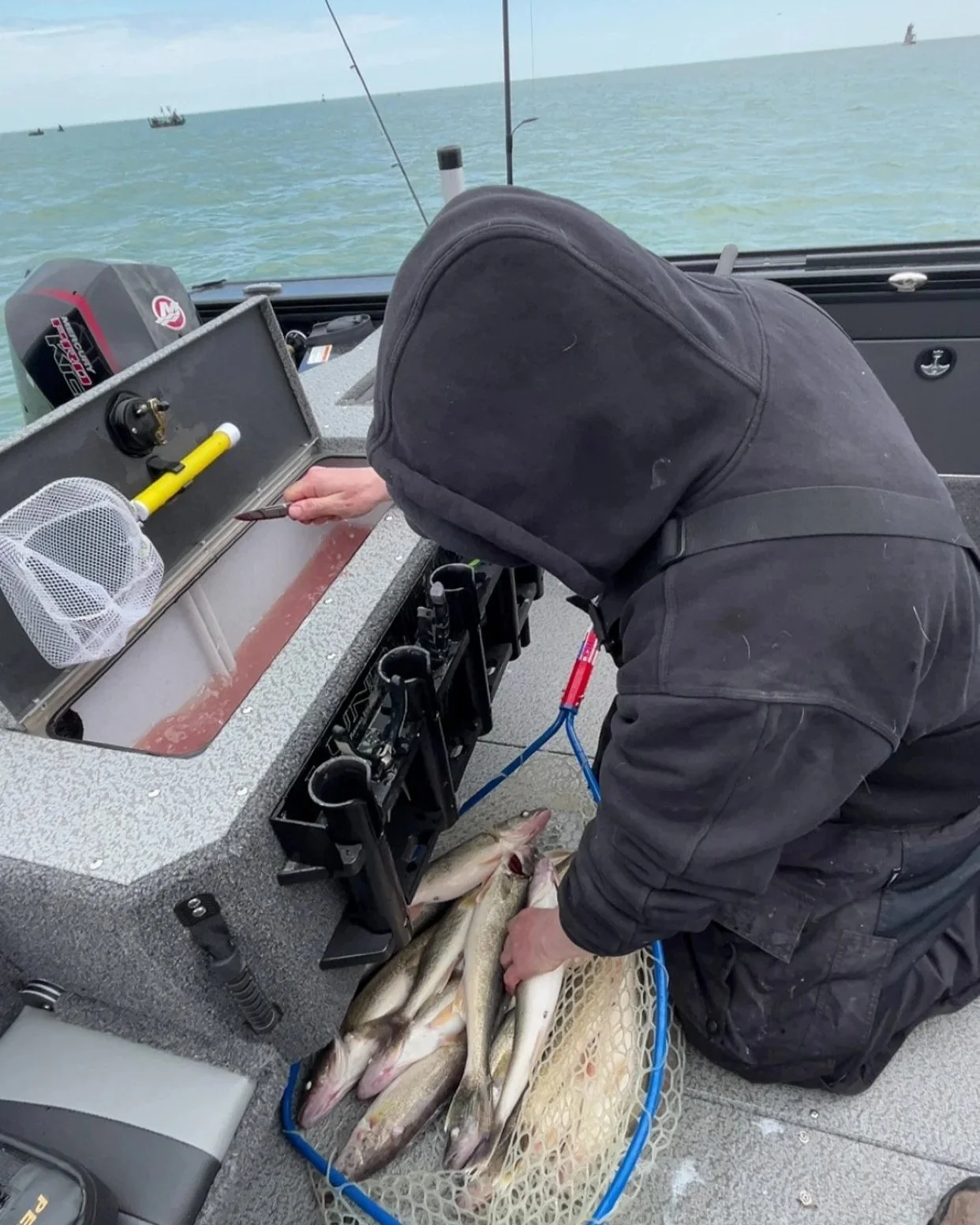
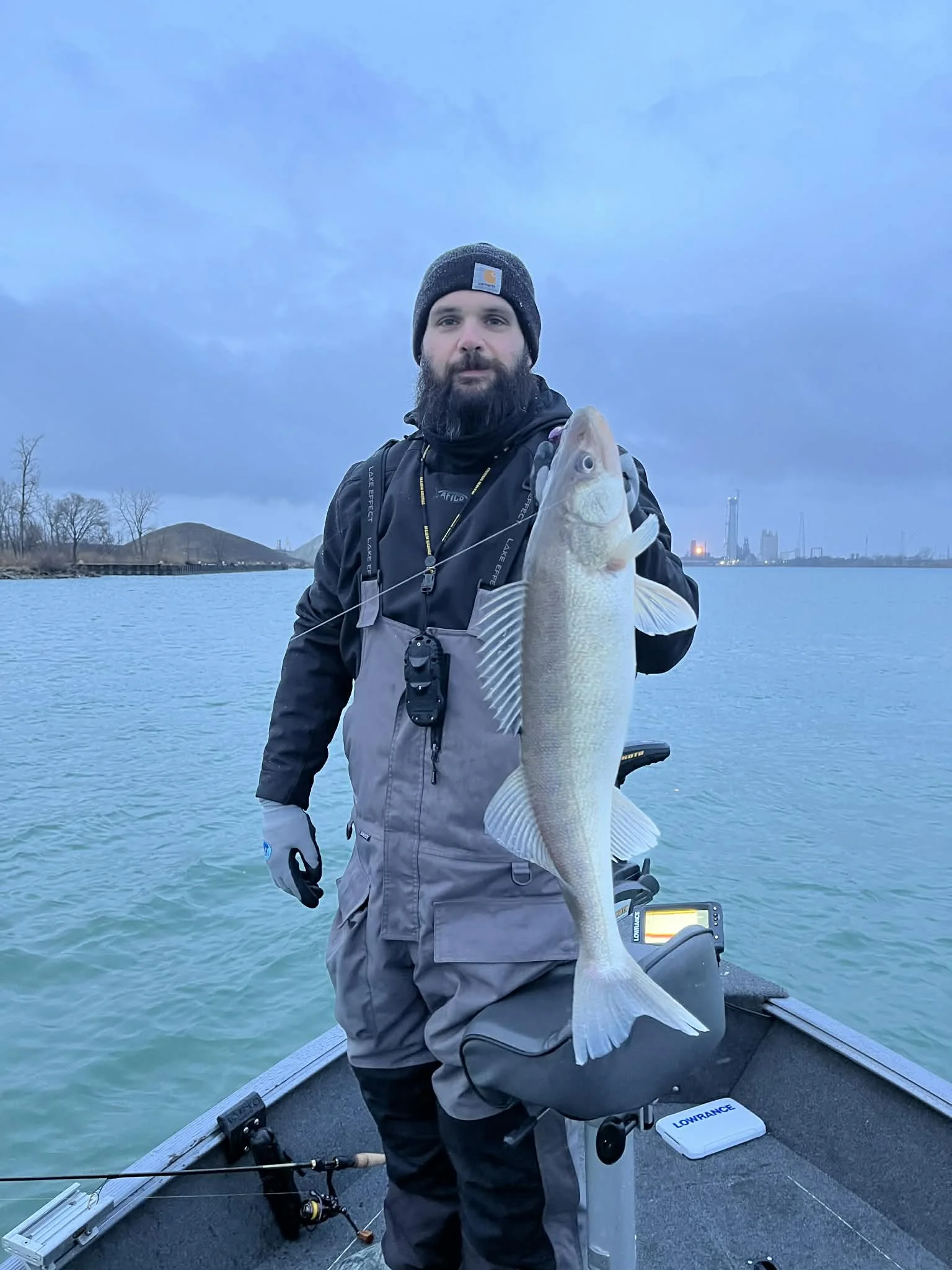
As there will be groups or packs of boats working different areas of the river, do not hesitate to explore on your own. Don’t be intimidated by empty water or lured into "community holes" just because there’s a crowd. Often, the best bite is waiting in the quiet areas everyone else overlooked, rewarding the angler who trusts their instincts and skill enough to explore. There are literally millions of fish in the Detroit River- a confident angler should not have any trouble finding fish on their own.
Vertical Mechanics: More to it than what meets the eye(let)
Staying vertical is crucial when jigging large rivers like the Detroit or St Clair. The better you can stay vertical, the more successful one will be at detecting bottom, feeling bites, and catching fish.
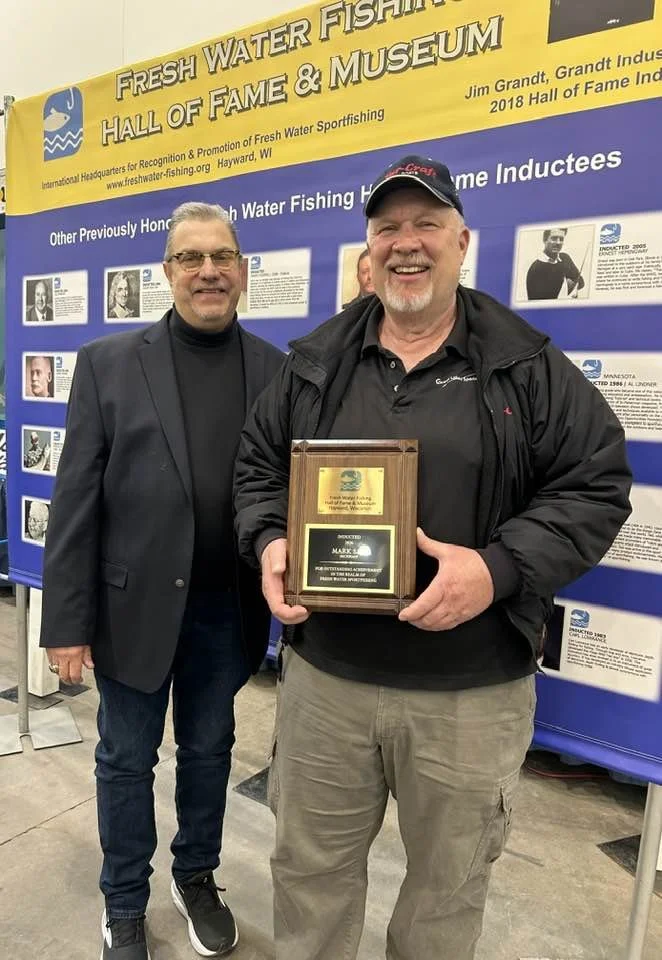
Newly inducted into the freshwater fishing hall of fame, Mark Sak is no stranger to the Detroit River and similar Great Lakes waterways. He has made a career in outdoor media and in competing in some of the biggest stages in competitive walleye fishing. He is not new to this, he is TRUE to this!!
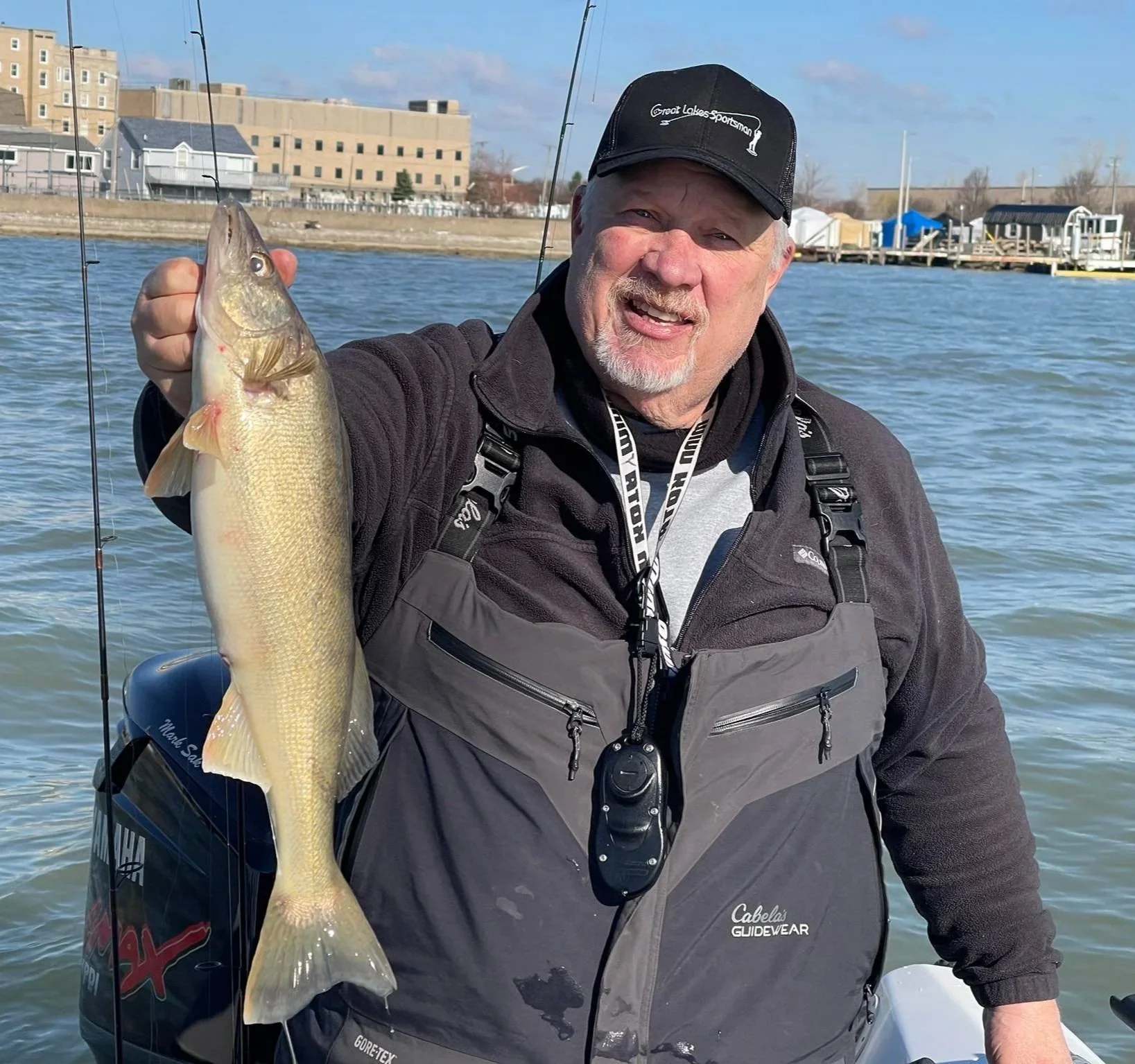
He shares that one effective way to help everyone stay vertical while jigging in strong current is to have the angler running the bowmount trolling motor use a smaller jig like a 3/4 oz while the crew in the back jig with a 1 oz. This weight difference creates distinct drift angles for each line, preventing the bow angler's jig from drifting back into the lines of the crew behind them. This setup uses the physics of the current to keep each presentation in its own lane
Another jigging tip is not fishing the transom (the back of the boat) where it may swing back and forth as the operator tries to stay vertical. Anglers should move up near the fulcrum (the middle) which is closer to the windshield which swings much less. Being in the middle of the boat where it is most steady prevents a pendulum effect created by the transom’s lateral swing, making sure your line stays vertical and your jig remains in the strike zone.
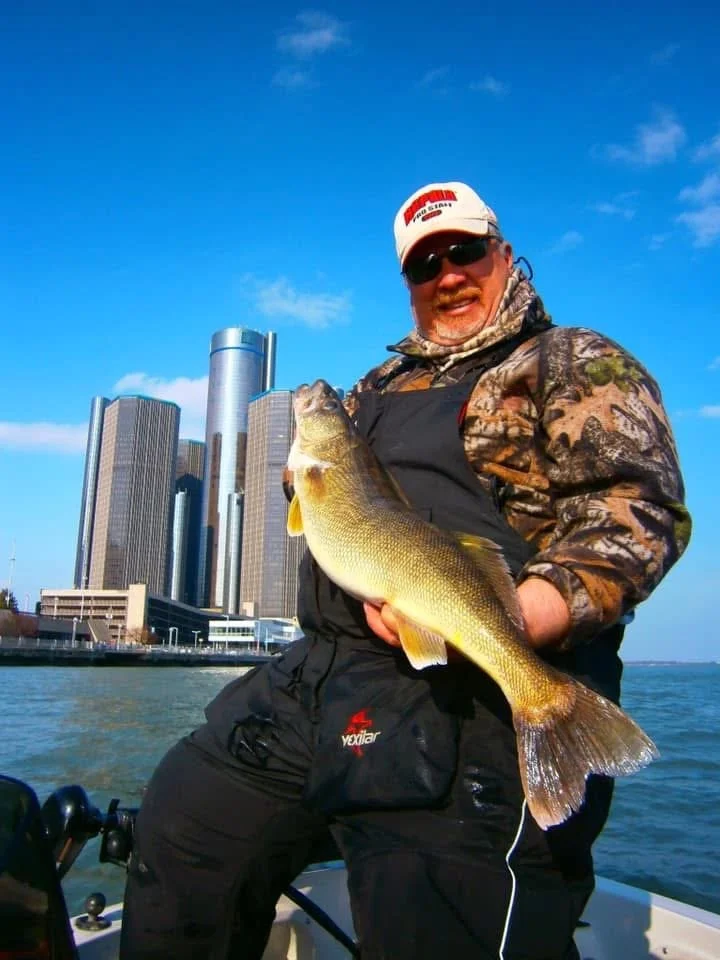
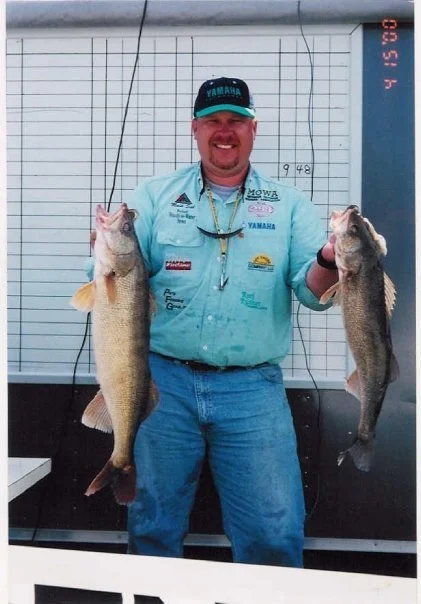
“It is important to remember Jigs move very quickly with the boat downstream. Walleye will have a split second to react. Anglers will catch more fish by keeping the jig 2-4 inches off the bottom. A hard and high jigging action will keep the jig out of the fish zone for a good amount of time. Stay tight to bottom without hitting the bottom.”
To read more about Mark Sak and his recent Freshwater Fishing Hall of Fame story, click here.
Make sure you are licensed and legal before you go!


Water Color
There seems to be endless water to choose from. It may be overwhelming when looking where to start. Michigan Walleye Tour angler, Tyler Domke, shares that water color is one of the biggest factors when making a decision where to fish.
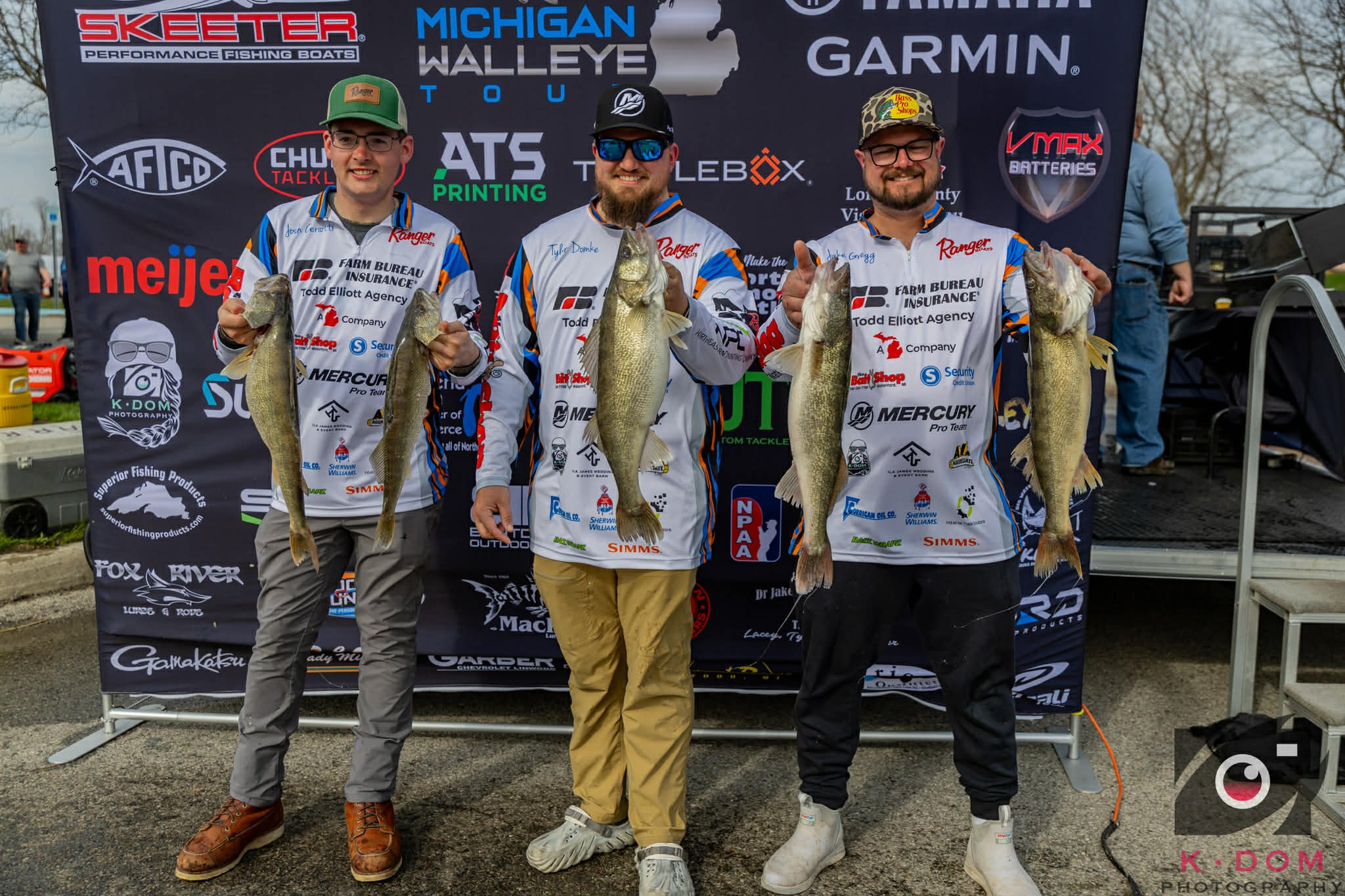
Tyler Domke (middle) shows off some fish with his MWT teammates, Josh Ceroitti (left) and Jake Greg (right), from the 2026 Detroit River Tournament.
Walleye will use a mud line as an ambush curtain where they can use the murky water as overhead cover while easily spotting prey silhouetted in the clearer water nearby. An added benefit for the fish is that stained or dirty water can be warmer. While a couple of degrees might not look like much, to a cold-blooded animal, it is a significant difference that may produce more active walleyes on the hunt.
“I like to see a good stain in the water. When you look off the back of the boat if you can’t see the cavitation plate of your motor it’s generally too dirty. I like 1.5-3’ of visibility. 2D sonar and side scan are great tools for locating the fish. A lot of times I will start in the depth where I notice the water color changes.”
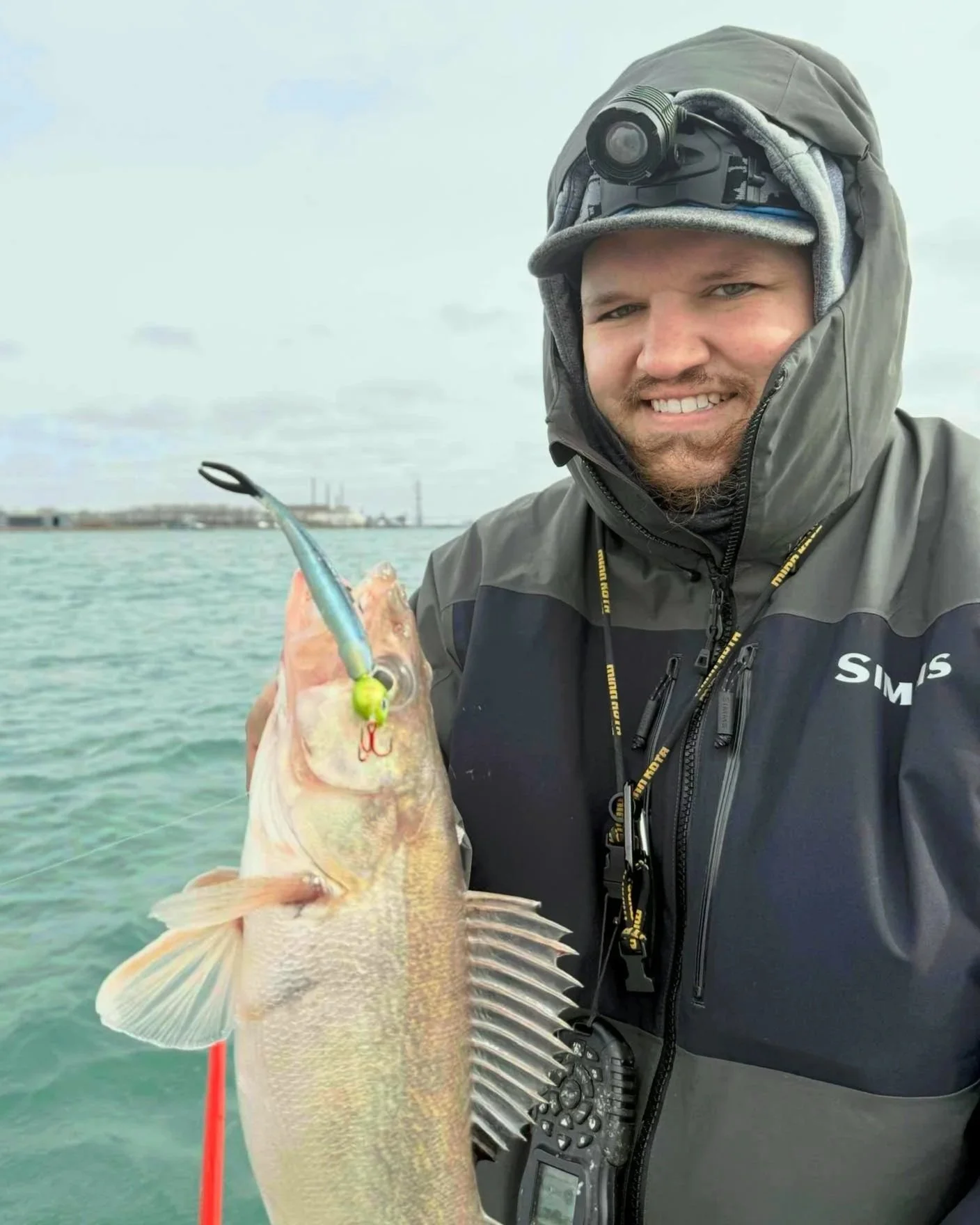
“Antifreeze is one of my favorite colors. It does well in stained water and gives me confidence as my go-to!”- Tyler Domke
When fishing these transitions, color choice is all about helping the fish 'home in' on the target. Contrast and silhouette are important to consider when thinking of color selection. While Dark vs bright colors are on opposite ends of the color spectrum, they both stick out in these conditions. In stained visibility, high-vis colors like chartreuse, antifreeze, or orange are wonderful options because of they pop in the stain. Variations of black and purple are very popular as they create a hard silhouette that stands out when a walleye is looking through the murk. These colors with something that has a lot of kick, like a paddletail swimbait or a Bondy Baits D-tail worm. That extra vibration acts like a secondary signal; it calls them over to the jig, and the high-contrast color gives them a clear target to hit once they close the gap.
Spring on the Detroit River is truly one of the greatest phenomenons in nature. It is the largest walleye migration in the world, perhaps even of all freshwater fish. While late March to early June is the peak, there are fish throughout the entire year across the system. Tips and information shared in this article work anywhere there is significant current with walleye around the Great Lakes, especially the on the St Clair River that begins to warm up and improve after the Detroit River.
Go out there, have fun, learn something every time, and stay safe.
A word of appreciation is shared for Chris Carroll, Nick Barnes, Mark Sak, and Tyler Domke for their contribution and photos to this article. Thank you!!